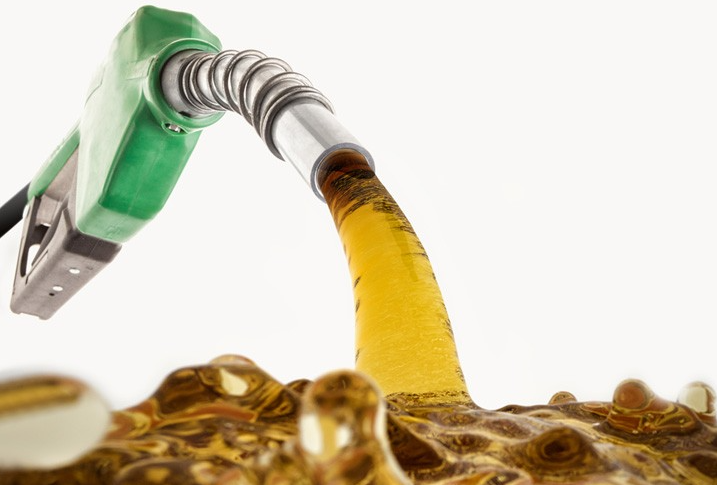
The current diesel (High-Speed Diesel / HSD) price in Pakistan is Rs. 335.86 per litre, effective from March 7, 2026 — following an emergency increase of Rs. 55 per litre announced by the federal government. This is one of the steepest single-day diesel price hikes in Pakistan’s history, driven by a global oil supply shock triggered by escalating Middle East tensions.
In this complete guide we cover the current diesel rate, price history, what is driving prices up, and how this affects Pakistan’s transport, agriculture, and everyday costs.
📋 In This Article
- Current Diesel Price in Pakistan Today
- What Is HSD Diesel? Types of Diesel in Pakistan
- Why Did Diesel Price Increase in March 2026?
- Diesel Price History in Pakistan 2020–2026
- Factors That Determine Diesel Price
- Impact on Transport & Freight Costs
- Impact on Agriculture & Farming
- Impact on Inflation & Food Prices
- How to Reduce Diesel Consumption
- Frequently Asked Questions
⬡ Current Official Diesel Price — March 7, 2026
All prices PKR/litre · Source: OGRA / Ministry of Energy · Effective 07 March 2026
Current Diesel Price in Pakistan Today
As of March 7, 2026, the official High-Speed Diesel (HSD) price in Pakistan is Rs. 335.86 per litre. This was announced by Deputy PM Ishaq Dar alongside Finance Minister Muhammad Aurangzeb and Petroleum Minister Ali Pervaiz Malik in a late-night press conference on March 6, 2026.
The government also announced a key policy shift: instead of traditional fortnightly (15-day) reviews, Pakistan has moved to weekly fuel price adjustments to better respond to extreme global oil market volatility.
📅 Diesel Price Changes in 2026
| Effective Date | HSD Price | Change |
|---|---|---|
| Jan 1, 2026 | Rs. 249.70 | — |
| Jan 16, 2026 | Rs. 258.70 | ▲ +9.00 |
| Feb 1, 2026 | Rs. 261.70 | ▲ +3.00 |
| Feb 16, 2026 | Rs. 275.70 | ▲ +14.00 |
| Mar 1, 2026 | Rs. 280.86 | ▲ +5.16 |
| Mar 7, 2026 (Emergency) | Rs. 335.86 | ▲ +55.00 |
What Is HSD Diesel? Types of Diesel in Pakistan
Pakistan uses two main types of diesel fuel, each serving a different purpose:
High-Speed Diesel (HSD)
HSD is the primary diesel used in Pakistan — regulated by OGRA and used in all diesel-powered vehicles and machinery including trucks, buses, tractors, generators, and industrial equipment. When news reports or transport unions mention “diesel price in Pakistan,” they always mean HSD.
Light Diesel Oil (LDO)
LDO is a cheaper, lower-grade diesel used mainly in older industrial engines and some agricultural machinery. Its price is also government-set but it is less available at retail pumps. Current LDO price: Rs. 159.76 per litre (unchanged in the March 2026 hike).
Notably, HSD at Rs. 335.86 is currently more expensive than petrol at Rs. 321.17 — driven by the steeper surge in global diesel prices during the March 2026 Middle East crisis.
Why Did Diesel Price Increase in March 2026?
Middle East Conflict & Oil Supply Shock
Escalating military tensions involving Iran, the US, and Israel raised serious fears about disruption to the Strait of Hormuz — the waterway through which roughly one-fifth of the world’s oil passes. International diesel prices jumped from about $88 to nearly $150 per barrel between March 1–7, 2026, forcing an immediate domestic price response.
IMF Program Obligations
Under Pakistan’s $7 billion IMF Extended Fund Facility, the government is required to pass on global fuel price movements without subsidies — leaving no room to absorb even part of the shock.
Import Dependence & Rupee Weakness
Pakistan imports a large share of petroleum products, purchased in US dollars. A weaker Rupee against the dollar means higher import costs even when global prices are flat. In March 2026, both rising global prices and a weak Rupee worked against Pakistan simultaneously.
Petroleum Development Levy (PDL)
The government collects a PDL of up to Rs. 60 per litre on diesel. A slight adjustment was made to partially cushion the March 7 hike, but the global price surge was large enough to produce a Rs. 55 increase regardless.
Diesel Price History in Pakistan 2020–2026
| Year / Period | HSD Price (PKR/L) | Notable Event |
|---|---|---|
| Jun 2020 | Rs. 80.08 | COVID-19 demand crash |
| Dec 2021 | Rs. 127.30 | Recovery phase |
| Jun 2022 | Rs. 262.00 | Subsidy removal shock |
| Sep 2023 | Rs. 323.38 | Previous record high |
| Oct 2024 | Rs. 247.03 | Price correction period |
| Jan 2026 | Rs. 249.70 | Start of 2026 |
| Mar 7, 2026 | Rs. 335.86 | All-time record high |
At Rs. 335.86, the current diesel price is Pakistan’s highest ever — surpassing the previous record of Rs. 323.38 set in September 2023.
Factors That Determine Diesel Price in Pakistan
1. International Crude Oil Prices
Since Pakistan imports most of its petroleum, global benchmarks (Brent Crude and Arabian Light) are the single biggest driver. When global crude rises, Pakistani diesel prices follow — immediately in emergencies, otherwise at the next fortnightly review.
2. Exchange Rate (USD/PKR)
Oil is bought in US dollars. When the Rupee weakens, each barrel costs more in PKR even if dollar prices hold steady. Both pressures combined in March 2026.
3. OGRA’s Pricing Formula
OGRA calculates a recommended price using: international oil price (FOB), freight, insurance, port costs, inland transport, oil company margins, and dealer margins. The Ministry of Energy then notifies the final approved price.
4. Petroleum Development Levy (PDL)
The PDL is charged per litre and is a key source of government revenue. Maximum PDL on HSD allowed under law is Rs. 60 per litre.
5. General Sales Tax (GST)
GST is currently not charged on petroleum products under IMF program commitments — otherwise it would add a further 17–18% to pump prices.
Impact on Transport & Freight Costs
Almost every truck, bus, and heavy vehicle on Pakistani roads runs on HSD. When diesel prices jump, transport costs follow immediately — and get passed to consumers.
A truck covering 1,000 km at 4 km/litre consumes 250 litres per trip. At Rs. 335.86 that is Rs. 83,965 in diesel — up from Rs. 70,215 at the old price. That extra Rs. 13,750 per trip flows through the supply chain to the end consumer.
⚠️ Cascading Effect
Higher diesel → higher freight → higher supplier costs → higher retail prices. This chain reaction can take 2–4 weeks to fully appear in consumer prices, meaning the full impact of the March hike may still be working through the economy.
Transport unions across Pakistan have already announced fare revisions following the March 7 hike, and goods carriers have warned that old freight rates are no longer viable.
Impact on Agriculture & Farming
Pakistan’s agricultural sector employs tens of millions and depends almost entirely on diesel — tractors, tube wells, threshers, combine harvesters, and irrigation pumps all run on HSD.
A farmer running a diesel tube well for 8 hours consumes roughly 4–6 litres per day. At Rs. 335.86, that is Rs. 1,343–2,015 daily — up from Rs. 1,123–1,685 at the old price. For small-scale farmers with limited cash flow during the spring wheat harvest season, this is a serious extra burden.
Higher diesel costs flow into wheat prices, vegetable costs, and ultimately into food inflation for urban consumers.
Impact on Inflation & Food Prices
Diesel is a core input — its price affects the cost of nearly everything in the economy. Sectors most impacted by diesel-driven inflation:
- Food & beverages — all food is transported by diesel-powered trucks from farms to markets.
- Manufacturing — factories using generators or diesel-powered machinery face higher production costs.
- Construction — machinery and material transport become more expensive.
- Electricity generation — power plants using furnace oil or diesel face higher input costs, which can feed into future tariff increases.
Economists note that fuel price hikes reliably trigger inflation within 2–6 weeks across multiple consumer categories.
How to Reduce Diesel Consumption
- Maintain correct tyre pressure. Under-inflated tyres increase fuel consumption by up to 10%.
- Service your diesel engine regularly. Clean injectors, fresh air filters, and correct oil viscosity all improve efficiency.
- Avoid unnecessary idling. A diesel truck left idling burns 2–4 litres per hour for zero output.
- Drive at optimal speeds. Most diesel vehicles peak at 60–80 km/h. Speeds above 100 km/h significantly raise consumption.
- Maximise load efficiency. Full loads reduce cost per unit of cargo.
- Plan routes efficiently. Shorter, optimised routes cut total diesel spend per delivery.
- Use our Fuel Cost Calculator to accurately budget monthly diesel expenses.
Frequently Asked Questions About Diesel Price in Pakistan
What is the diesel price in Pakistan today?
As of March 7, 2026, the official High-Speed Diesel (HSD) price is Rs. 335.86 per litre — Pakistan’s highest ever diesel price.
What is the difference between HSD and LDO diesel?
HSD (High-Speed Diesel) is the standard fuel for vehicles, trucks, tractors, and modern generators. LDO (Light Diesel Oil) is a cheaper, lower-grade diesel for older industrial machinery. HSD at Rs. 335.86 is the price most Pakistanis encounter at the pump.
Why is diesel more expensive than petrol in Pakistan right now?
International diesel prices surged more sharply than petrol — jumping from around $88 to nearly $150 per barrel between March 1–7, 2026 — due to the Middle East supply shock. This steeper global rise produced a larger domestic increase for HSD vs petrol.
How often does diesel price change in Pakistan?
Normally twice a month (1st and 16th). As of March 2026, the government has moved to weekly reviews due to extreme global market volatility.
How does diesel price affect food prices in Pakistan?
All food in Pakistan is transported by diesel-powered trucks. When diesel rises, freight costs rise and get passed along the entire supply chain — from farm to wholesale market to shop to consumer. Higher food prices typically appear within 2–4 weeks of a diesel hike.
Who sets diesel prices in Pakistan?
OGRA calculates a recommended price using international crude costs, freight, taxes, and margins. The Ministry of Energy (Petroleum Division) notifies the final approved price, which applies at all petrol pumps nationwide.
Conclusion
Diesel is the fuel that moves Pakistan’s entire economy. When HSD reaches Rs. 335.86 per litre, every Pakistani feels the impact — through higher transport fares, more expensive food, and rising inflation — whether or not they own a vehicle. Tracking diesel prices is essential for businesses, farmers, transporters, and households managing their budgets.
Stay updated with the latest official rates at PakistanPetrolPrices.com — updated every week from official OGRA notifications.
