Fuel Policy | Pakistan Energy News
Govt Plans Digital App to Allocate Petrol and Diesel Quotas — What You Need to Know
Pakistan is preparing to overhaul the way its 250 million citizens access petrol and diesel. Instead of walking into any filling station and refuelling at will, vehicle owners will soon be required to register on a government-developed mobile app, receive a fixed daily fuel quota tied to their Computerised National Identity Card (CNIC) and vehicle registration number, and generate a digital voucher before every refuel. The initiative — technically finalised by the Oil and Gas Regulatory Authority (OGRA) alongside the ministries of finance, petroleum, and information technology — is now awaiting cabinet-level approval.
The announcement comes as petrol prices in Pakistan remain frozen following a sudden Rs 55 per litre hike on 6 March 2026, a decision driven by surging international crude costs and a rapidly tightening domestic supply picture. Two consecutive weekly revision cycles have since passed without any price change, but the fiscal strain has been enormous. Keeping rates stable for just two weeks is estimated to have cost the national exchequer approximately Rs 70 billion, financed through cuts in the development budget and emergency allocations.
Why Now? The Global Oil Crisis Context
The immediacy of this plan is inseparable from the geopolitical storm unfolding in the Middle East. An ongoing conflict involving Iran has caused serious disruptions to shipping lanes in the Strait of Hormuz — one of the world’s most critical oil transit arteries — sending global crude prices into sharp volatility. Pakistan, which imports the bulk of its petroleum requirements, is acutely exposed to these shocks.
Officials say that demand for petroleum products has not declined despite price increases, creating a dangerous mismatch between available supply and consumption. In response, the finance and foreign affairs ministries are simultaneously engaging Iran and Saudi Arabia to manage supply conditions, while the quota app is being fast-tracked as a domestic demand-management tool.
Even as petrol and diesel rates were held steady, kerosene prices and jet fuel costs have surged by approximately 128% and 150%, respectively, since the conflict escalated — a clear sign of the extreme pressure building up across the entire petroleum supply chain. See the latest diesel price in Pakistan and petrol price today for the most current rates.
How the Digital Quota System Will Work
The proposed mechanism is designed to be fully end-to-end automated, drawing on the architecture of the previously successful Ramazan Package digital subsidy model. Here is how the system is expected to function once live:
Step-by-Step: The App-Based Fuel Quota Process
- Download & Register: Citizens download the consumer app (free) and register by entering their CNIC number and vehicle registration number. Each vehicle is enrolled individually.
- Quota Assignment: The system analyses usage patterns and prevailing fuel availability, then assigns a daily petrol or diesel quota to each registered vehicle. Final quota limits will be set by the relevant cabinet committee.
- Generate a Digital Voucher: Before visiting a filling station, the user generates a digital fuel voucher through the app for the desired amount.
- Pump-Side Validation: Petrol pump operators use a separate, dedicated app (pre-installed on government-supplied smartphones) to scan or enter the voucher. The system auto-validates the user’s remaining quota balance.
- Automatic Restriction: If a user requests more fuel than their assigned quota — say, 20 litres when only 15 remain — the system will dispense only the permissible amount. There is no override.
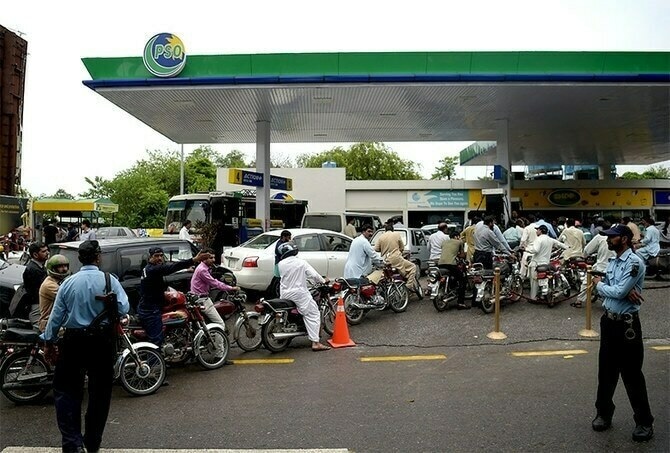
- Dedicated Dispensers: Fuel stations will have separate dispensers for subsidised categories such as motorcycles and rickshaws, to streamline the process and prevent queue congestion.
To support the pump-side infrastructure, the Ministry of Information Technology has been coordinating with mobile phone manufacturers to supply specialised handsets at an estimated cost of Rs 36,000 per unit. Petrol stations have already been required to deposit funds into a designated OGRA account to ensure timely delivery of these devices. Each retail outlet will be mandated to maintain a minimum of two smartphones to run the system.
Who Is Covered? Motorcycles, Rickshaws — and Possibly Cars
The initial rollout is primarily targeted at two- and three-wheelers — motorcycles and rickshaws — which represent the largest segment of low-income road users in Pakistan and the group most reliant on subsidised fuel. These users are expected to receive subsidised fuel prices, with dedicated dispensers allocated at filling stations to serve them.
However, a significant policy decision is still pending: whether the quota-based system, and associated subsidies, will be extended to small cars or remain restricted to two- and three-wheelers. Officials at OGRA and the petroleum ministry are still assessing the fiscal implications of a broader rollout. Critics within government circles have also flagged that not all motorcycle riders own smartphones, which could create practical barriers to registration and voucher generation.
For private car owners curious about how this may affect their monthly petrol costs, or those who operate diesel vehicles, it is worth monitoring developments closely. The final scope of the scheme will materially change how much fuel is available at subsidised rates — and at what price. Check our petrol price calculator to estimate how a quota system could affect your monthly fuel budget.
The Rs 100 Billion Subsidy Burden — and Why Provinces Must Now Help
Parallel to the quota app announcement, Prime Minister Shehbaz Sharif held a meeting with President Asif Ali Zardari at Aiwan-e-Sadr to discuss a plan to bring provincial governments into the petroleum subsidy financing framework. The federal government has already disbursed approximately Rs 100 billion in fuel subsidies to consumers across the country — a figure that is rapidly becoming unsustainable on federal finances alone.
“The increasing subsidy expenditure underscores the urgency of implementing reforms that can reduce dependency on broad-based financial support.” — Senior government official
The centre is now pressing provincial administrations in Punjab, Sindh, Khyber Pakhtunkhwa, and Balochistan to share the subsidy burden. This shift in policy reflects the government’s recognition that universal, price-based fuel subsidies — while politically popular — are fiscally unsustainable under current global conditions. The digital quota app, in this context, is as much a financial instrument as a distribution mechanism: it allows the government to target subsidies precisely at lower-income vehicle owners rather than broadly subsidising all consumers including those who do not need relief.
Transparency, Accountability, and the Anti-Black Market Case
One of the core justifications for moving to a digital quota model is the potential to eliminate the kind of large-scale misuse and black-market diversion that has plagued Pakistan’s fuel sector for decades. By maintaining a centralised, real-time digital record of every transaction — from quota allocation through to pump-side dispensing — authorities will be in a position to detect and act on irregular patterns quickly.
The system’s architecture makes it structurally difficult to divert subsidised fuel. Because each voucher is tied to a specific CNIC and vehicle registration, bulk purchasing for resale becomes traceable. Pump operators who attempt to dispense beyond a user’s quota will face automatic system rejection rather than a discretionary human decision.
That said, concerns persist. Some observers note that a black market for vouchers or registration credentials could emerge, particularly given the income differential between subsidised and market-rate fuel. The government’s ability to police this will depend heavily on the security architecture of the app and how robustly it verifies user identity at the point of purchase.
Impact on Daily Commuters and Transport Operators
For the average Pakistani who relies on a motorcycle or CNG-converted rickshaw for daily work, the app-based quota system is a double-edged development. On one hand, it brings the prospect of subsidised fuel prices — a meaningful financial benefit at a time when petrol is already at record highs. On the other, it introduces a layer of digital bureaucracy that could prove challenging for users with limited smartphone literacy or intermittent internet access.
Transport operators — particularly those running fleets of rickshaws or small delivery motorcycles — will need to register each vehicle separately and manage individual quotas. For larger fleet operators, this represents a significant administrative change. For individual daily commuters, the key question will be whether their allocated quota is sufficient for their typical usage, or whether they will regularly find themselves up against daily limits.
Those keeping track of daily petrol consumption can use our fuel cost calculator to work out how a daily quota might affect their travel planning. Meanwhile, the latest diesel price in Pakistan remains a crucial figure for commercial vehicle operators who will be watching cabinet decisions on four-wheeler inclusion closely.
What Happens Next: The Road to Cabinet Approval
The technical work is done. OGRA, the Ministry of Finance, the Ministry of Petroleum, and the Ministry of Information Technology and Telecommunication have jointly tested and finalised the system. What remains is cabinet-level sign-off, after which a formal launch date and rollout timeline will be announced.
Key decisions still to be made include: the exact daily quota figures for different vehicle categories, whether small cars will be included, the final subsidy rate for two- and three-wheelers, and the cut-off date by which petrol stations must have their hardware in place. Provincial governments are also expected to formally respond to the centre’s call for co-financing arrangements before the scheme can be fully operationalised at a national scale.
Pakistan’s fuel policy is evolving rapidly. Bookmark our petrol price today page and diesel price page for daily updates, and follow our Pakistan petrol news section for the latest developments on the quota app rollout, subsidy policy changes, and international oil market movements affecting Pakistan.