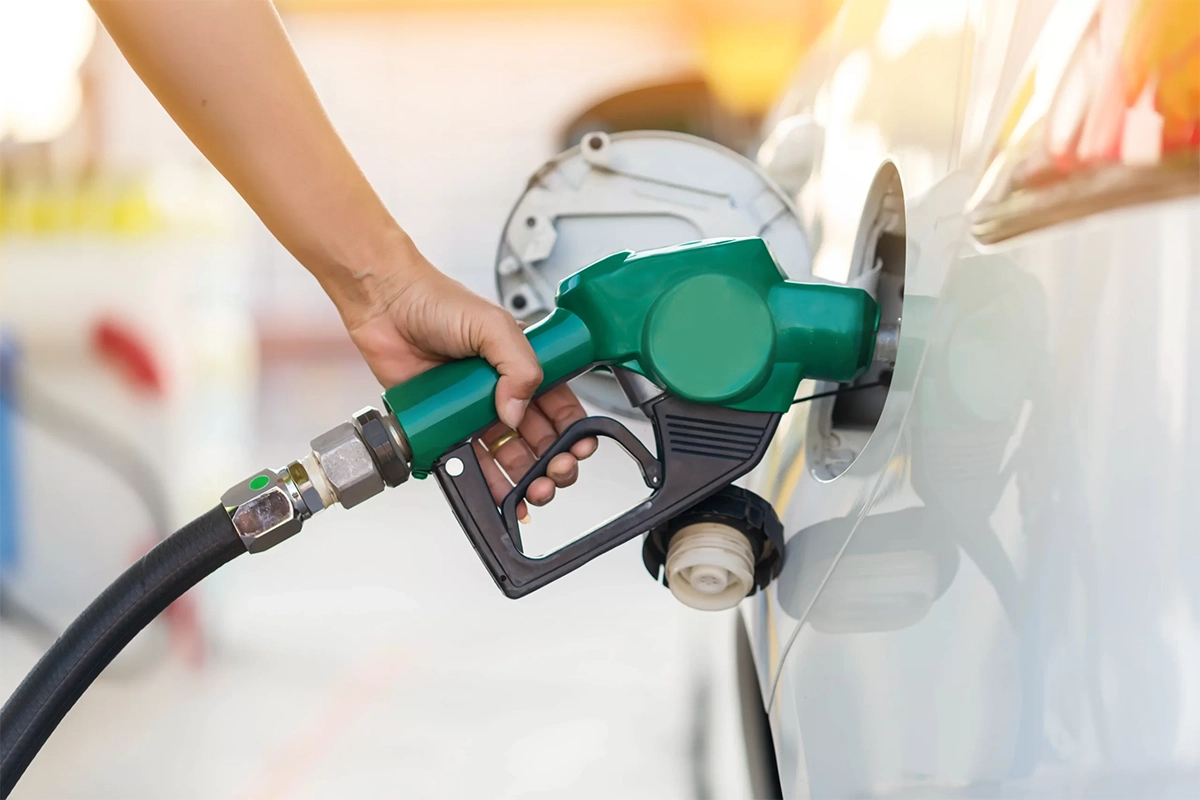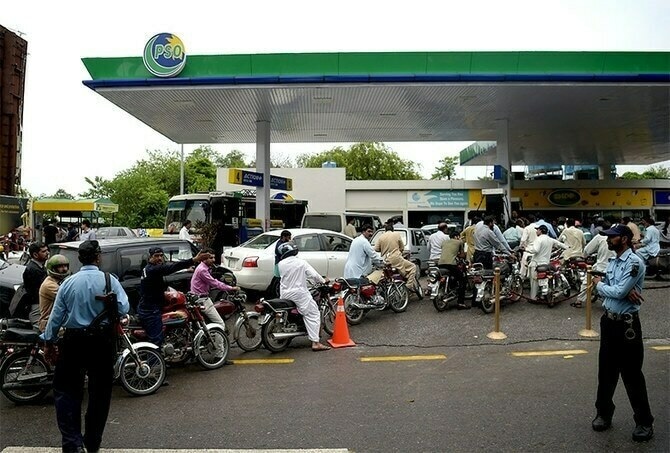
Pakistan’s petrol price jumped by Rs. 55 per litre overnight on March 7, 2026 — pushing petrol to Rs. 321.17 and diesel to Rs. 335.86 per litre. For the average Pakistani, this isn’t just a number on a pump. It is the cost of getting to work, putting food on the table, and running a small business.
In this article, we break down exactly how this petrol price hike affects the daily life of common people in Pakistan — from rickshaw drivers in Karachi to wheat farmers in Punjab.
📋 In This Article
- Why Did Petrol Prices Increase in March 2026?
- Impact on Transport & Daily Commute
- Impact on Food Prices & Grocery Bills
- Impact on Household Budget
- Impact on Small Businesses
- Impact on Farmers & Agriculture
- Impact on Overall Inflation
- Worsened by Ramazan Timing
- How to Reduce Your Fuel Costs
- Frequently Asked Questions
⬡ Current Official Prices — March 7, 2026
All prices in Pakistani Rupees (PKR) per litre. Source: Ministry of Energy (Petroleum Division) / OGRA.
Why Did Petrol Prices Increase in March 2026?
The government announced a sudden emergency fuel price hike on the night of March 6, 2026, with new prices taking effect on March 7. The decision was made in a high-level meeting chaired by Deputy Prime Minister Ishaq Dar and included the Finance and Petroleum Ministers.
Several factors came together at once to cause this historic increase:
1. Middle East Conflict & Strait of Hormuz Disruption
Escalating tensions involving Iran, the US, and Israel created fears of supply disruption through the Strait of Hormuz — the narrow waterway through which nearly one-fifth of the world’s oil passes. This single development sent global crude oil prices surging by 50–70% in early March 2026, forcing Pakistan to react immediately.
2. IMF Program Conditions
Under Pakistan’s $7 billion IMF Extended Fund Facility (EFF), the government is required to pass on international fuel price movements to consumers rather than subsidising them. This left the government with little choice but to approve the full hike.
3. Pakistan’s Heavy Import Dependence
Pakistan imports the majority of its petroleum products. Last year, petroleum imports cost the country over $16 billion — the single largest item on Pakistan’s $58.4 billion import bill. When global prices rise, domestic prices follow almost immediately.
4. Rupee Weakness
Because oil is purchased in US dollars, a weaker Pakistani Rupee against the dollar makes every litre of imported fuel more expensive even if global crude prices stay flat. Both pressures hit simultaneously in March 2026.
Impact on Transport & Daily Commute
Transport is where most Pakistanis feel a fuel price hike first and most sharply. Within hours of the March 7 announcement, transport fares across major cities had already begun rising.
Motorcycles — The Lifeline of Pakistan
Pakistan has over 25 million registered motorcycles — more than any other vehicle category. For millions of daily commuters and delivery workers, a motorcycle is not a luxury but a necessity. At Rs. 321.17 per litre, filling a 10-litre tank now costs over Rs. 3,200, compared to just Rs. 2,662 before the hike. That is an extra Rs. 538 per tank — a meaningful amount for a daily-wage worker earning Rs. 1,000–1,500 per day.
Public Transport & Rickshaws
Bus and van operators who run CNG vehicles are partially protected, but petrol-powered rickshaws, taxis, and minibuses have no choice but to raise fares. Transport unions across Pakistan have already announced fare adjustments, warning that current diesel and petrol prices make operations unsustainable at old rates. For the ordinary person who relies on public transport to commute to work, this means higher daily expenses with no corresponding increase in income.
Ride-hailing Services
Uber, Careem, and InDrive drivers — many of whom are self-employed gig workers — are seeing their operating costs rise sharply. App-based fares, which are partly regulated and slower to adjust, mean these drivers are effectively earning less per trip until platform pricing catches up.
💡 Real Cost Example: Daily Commuter
A person commuting 30 km daily on a 70cc motorcycle (average: 40 km/litre) uses about 0.75 litres per day. At Rs. 321.17, that is Rs. 241 daily — or Rs. 7,234 per month just in petrol, up from Rs. 5,978 before the hike. That is Rs. 1,256 extra per month from fuel costs alone.
Impact on Food Prices & Grocery Bills
Food prices in Pakistan do not move in isolation. They are directly tied to the cost of transporting goods from farm to market — and that cost is almost entirely diesel-driven.
When diesel prices rise by Rs. 55 per litre, every truck, reefer van, and delivery vehicle in the country sees its operating cost jump. Those extra costs get passed on at every step of the supply chain — from the wholesale market (mandi) to the retail shop to your kitchen table.
Following the March 7 hike, prices of vegetables, fruits, and packaged goods across Lahore, Karachi, and Peshawar saw noticeable jumps within days. Items like tomatoes, onions, and flour — already expensive during Ramazan — climbed further. While not every price increase is directly caused by fuel costs, transport inflation is one of the most reliable triggers of food price rises in Pakistan.
Economists have consistently observed that fuel price hikes in Pakistan trigger a chain reaction in commodity prices, as transportation and production costs rise together. For a family of five spending Rs. 30,000–40,000 per month on groceries, even a 5–8% increase in food prices translates to thousands of rupees in additional monthly expenses.
Impact on Household Budgets
Beyond transport and food, fuel prices ripple through household costs in several ways that are less obvious but equally painful.
Generator Fuel Costs
Millions of Pakistani households and businesses rely on petrol or diesel generators to cope with load-shedding. A household running a 2 kVA petrol generator for 4 hours per day consumes roughly 1.5–2 litres. At Rs. 321.17, that is Rs. 482–642 per day in generator fuel — or Rs. 14,500–19,300 per month — compared to Rs. 379–505 per day before the hike. For middle-class households, this alone can add Rs. 3,000–5,000 to monthly expenses.
LPG & Cooking Gas
While LPG prices are separately set by OGRA, the broader energy market pressure is felt in LPG too. In March 2026, market rates for LPG cylinders have already climbed well above official ceilings as supply disruptions from Iran affect availability. For households that cook on gas, this adds another layer of cost pressure on top of the petrol hike.
Electricity Bills
Pakistan’s power sector still relies partly on furnace oil and diesel for electricity generation. Higher fuel costs increase the cost of power generation, which can feed through to higher electricity tariffs in future NEPRA adjustments — adding yet another indirect cost on households.
Impact on Small Businesses
Pakistan’s economy is largely powered by small and medium enterprises (SMEs) — shops, restaurants, delivery services, small manufacturers, and traders. For most of them, fuel is a core operating cost that they cannot easily eliminate.
Delivery-based businesses — courier services, food delivery, e-commerce logistics, and wholesale distributors — face an immediate and direct hit. Every Rs. 55 increase per litre of petrol directly reduces their profit margin on each delivery unless they raise their delivery charges, which risks losing customers.
Retailers and shop owners who receive goods via transport also face higher freight charges from their suppliers. Most will have little choice but to pass these costs to end consumers, contributing to the broader inflation picture.
For small manufacturers who run machinery on diesel or use diesel-powered generators, input costs rise with every fuel hike — squeezing already thin margins in a challenging economic environment.
⚠️ Warning: Cascading Price Increases
Economists warn that fuel price hikes often set off a chain reaction in the broader economy. When fuel gets more expensive, freight costs rise → supplier costs rise → retail prices rise → household purchasing power falls. This cycle can take several weeks to fully work through the economy, meaning the full impact of the March 2026 hike may not be visible for another month.
Impact on Farmers & Agriculture
Pakistan’s agricultural sector, which employs millions and contributes significantly to GDP, is heavily dependent on diesel. Tractors, tube wells, threshers, and transportation of produce all run on diesel or petrol.
With diesel now at Rs. 335.86 per litre — up from Rs. 280.86 — a farmer running a tube well for irrigation faces dramatically higher electricity and diesel costs during the critical spring cultivation season. This comes at one of the worst possible times in the farming calendar.
Wheat farmers, who are preparing for harvest in the coming months, will see higher costs for tractor operations, harvesting machinery, and transporting grain to storage or markets. These increased costs are either absorbed by farmers (reducing their income) or passed on as higher prices for wheat and flour — which ultimately affect every household that buys bread or roti.
In rural areas, kerosene oil is also used for cooking and lighting by lower-income families. While kerosene prices remained unchanged this round, the overall pressure on rural household incomes from diesel and petrol is significant.
Impact on Overall Inflation in Pakistan
Pakistan’s State Bank and economic analysts track fuel prices as one of the most reliable leading indicators of inflation. When petrol and diesel rise sharply, broader price inflation typically follows within 2–6 weeks across multiple categories.
According to Arab News Pakistan, economists and industry leaders have warned that the March 2026 fuel price hike is expected to slow economic growth, push inflation higher, and hurt already declining exports. Pakistan’s trade deficit had already widened by 25% to $25 billion in the July–February period of the current fiscal year.
For every $5 increase in international oil prices, Pakistan’s import bill rises by approximately $1 billion, according to economic analysts. With global crude prices surging 50–70% in early March 2026, the pressure on Pakistan’s balance of payments is substantial.
Sectors most affected by fuel-driven inflation include:
- Food & beverages — via higher transport and production costs
- Textiles & manufacturing — via higher energy and logistics costs
- Construction — via higher machinery and material transport costs
- Retail trade — via higher supply chain and delivery costs
Worsened by Ramazan Timing
The March 7, 2026 fuel price hike landed in the middle of Ramazan — arguably the worst possible timing for Pakistani households. During Ramazan, food consumption and spending typically increase as families prepare iftar and sehri meals. Food prices already tend to rise during this period due to seasonal demand.
The combination of Ramazan demand pressure and a sudden fuel price spike has produced a particularly painful squeeze on household budgets. Citizens across Lahore, Peshawar, and Karachi expressed strong frustration, with daily-wage earners and gig workers bearing the sharpest burden. For families already struggling, “making both ends meet has become an almost impossible struggle,” in the words of ordinary Pakistanis surveyed by Pakistan Today.
Prices of vegetables and fruits — staples of iftar tables — saw noticeable jumps within days of the fuel hike, compounding the Ramazan inflation that families face every year.
How to Reduce Your Fuel Costs — Practical Tips
While you cannot control petrol prices, you can take steps to reduce how much fuel you consume:
- Maintain correct tyre pressure. Under-inflated tyres can reduce fuel efficiency by 5–10%. Check pressure weekly.
- Avoid aggressive acceleration and hard braking. Smooth, consistent driving can improve fuel average by 10–15%.
- Turn off the engine at long stops. Idling for more than 60 seconds wastes fuel. Switch off at traffic lights where safe to do so.
- Carpool with colleagues or neighbours. Sharing a journey between two people halves each person’s fuel cost.
- Service your vehicle regularly. A well-maintained engine, clean air filter, and fresh spark plugs can improve fuel average noticeably.
- Reduce unnecessary loads. Remove heavy items from your boot. Extra weight means higher fuel consumption.
- Plan errands efficiently. Combine multiple trips into one route rather than making separate journeys.
- Use our Fuel Cost Calculator to accurately track and manage your monthly fuel budget.
Frequently Asked Questions
What is the current petrol price in Pakistan in March 2026?
As of March 7, 2026, the official petrol (Motor Spirit MS 92) price in Pakistan is Rs. 321.17 per litre, following a Rs. 55 per litre emergency increase announced by the government. Diesel (HSD) is Rs. 335.86 per litre.
Why did petrol prices increase so suddenly in March 2026?
The increase was triggered by escalating military tensions in the Middle East involving Iran, the US, and Israel, which disrupted global oil supply routes including the Strait of Hormuz. Global crude oil prices surged 50–70% in early March 2026. Combined with Pakistan’s IMF program requirements to pass on international fuel costs to consumers, the government had little choice but to implement the hike.
How does petrol price increase affect inflation in Pakistan?
Fuel price hikes increase transportation costs across the entire supply chain — from farms to factories to shops. This pushes up the prices of food, manufactured goods, and services. Economists consider fuel prices one of the strongest drivers of inflation in Pakistan, with the full effect typically working through the economy within 2–6 weeks of a significant hike.
Will petrol prices go down again soon?
The government has moved to weekly price reviews (instead of the usual fortnightly schedule) to respond faster to global market changes. If global crude prices stabilise or decline, there is a possibility of a moderate reduction. However, as long as Middle East tensions remain elevated and the Strait of Hormuz faces disruption risks, downward pressure on prices is limited.
What is the highest petrol price ever recorded in Pakistan?
Prior to the March 2026 emergency hike, the all-time high was Rs. 331.38 per litre recorded in September 2023. The current price of Rs. 321.17 is approaching that record level and may exceed it if another increase occurs.
How much has petrol price increased since 2006 in Pakistan?
In 2006, petrol in Pakistan cost approximately Rs. 52–55 per litre. At the current rate of Rs. 321.17, prices have increased by over 500% in 20 years. See our full Pakistan Petrol Price History page for a complete year-by-year breakdown.
Conclusion
The March 2026 petrol price hike is not just a number — it is a pressure that touches every corner of Pakistani life. From the commuter on a 70cc motorcycle to the vegetable seller at the local mandi, from the small business owner to the farmer in the field, rising fuel costs make everything harder.
Until Pakistan reduces its dependence on imported oil through domestic energy development, refinery modernisation, and investment in renewables, every global crisis will continue to land directly on the pockets of ordinary Pakistanis.
Stay updated with the latest official fuel prices, history, and tools at PakistanPetrolPrices.com — Pakistan’s most reliable source for OGRA-verified fuel price data.
🔗 Related Pages on PakistanPetrolPrices.com