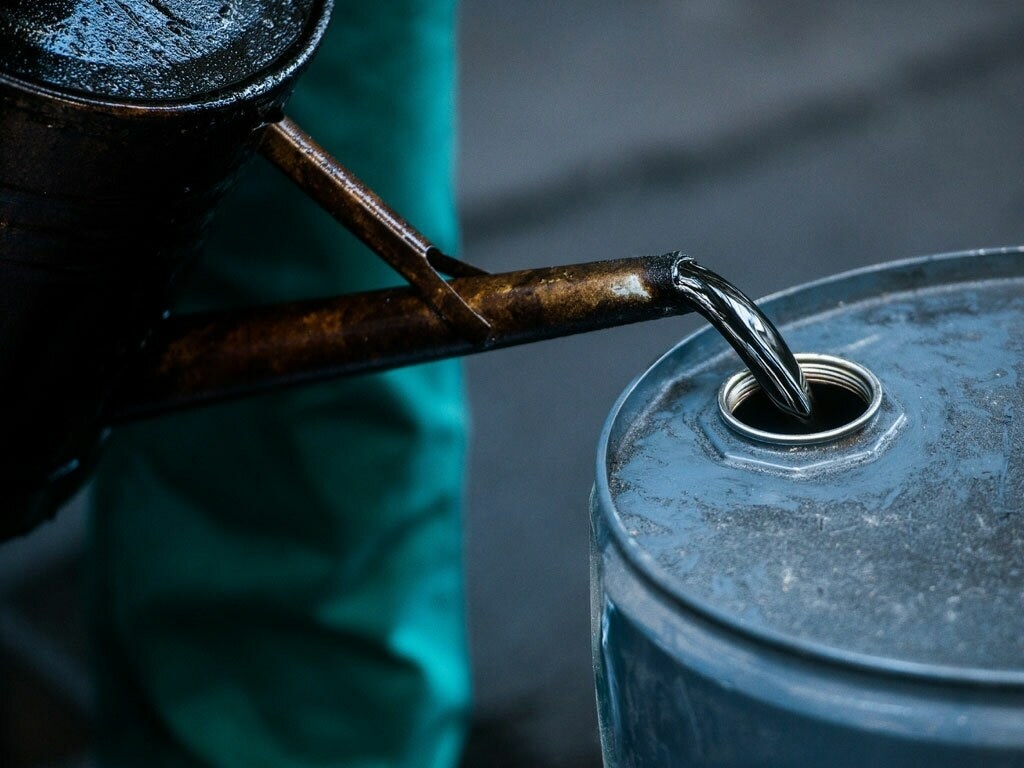
The Government of Pakistan on Saturday hiked kerosene oil prices by Rs. 40 per litre, raising the rate to Rs. 358.81 per litre — while keeping petrol and diesel prices unchanged for the second consecutive weekly review. The decision, announced by the Ministry of Energy (Petroleum Division) and notified by OGRA, takes effect from March 14, 2026.
In a significant relief measure, the federal government simultaneously announced it would absorb the full cost of keeping petrol and diesel prices frozen — paying Rs. 75.05 per litre on HSD and Rs. 49.63 per litre on petrol as a Price Differential Claim (PDC) to oil marketing companies (OMCs) from a newly created Prime Minister’s Austerity Fund.
⬡ Official Fuel Prices — Effective March 14, 2026
All prices PKR/litre · Source: OGRA / Ministry of Energy (Petroleum Division) · Effective 14 March 2026
Third Kerosene Hike in Two Weeks
The March 14 increase marks the third consecutive kerosene price hike in less than two weeks — an extraordinary sequence that has pushed kerosene prices up by roughly 90% since the start of March 2026.
| Effective Date | Kerosene Price (PKR/L) | Change |
|---|---|---|
| March 1, 2026 | Rs. 188.73 | — |
| March 7, 2026 | Rs. 318.81 | ▲ +130.08 (+69%) |
| March 14, 2026 | Rs. 358.81 | ▲ +40.00 (+12.6%) |
The cumulative increase in kerosene prices since March 1 now stands at Rs. 170.08 per litre — a 90% jump in just 14 days. This compares to the two-and-a-half decades it took for petrol prices to rise from Rs. 52 to Rs. 321 per litre.
Why Kerosene, and Why Now?
The government’s decision to raise kerosene sharply while protecting petrol and diesel has a clear strategic rationale — one the Petroleum Division has been explicit about in official statements.
Closing the Adulteration Gap
Kerosene had long been priced far below petrol and diesel. In early March 2026, the difference between petrol and kerosene was more than Rs. 130 per litre. This large price gap was routinely exploited by unscrupulous traders who mixed kerosene with petrol to profit from the difference — a form of fuel adulteration that damaged vehicle engines and shortchanged consumers. By bringing kerosene close to petrol prices, the government has effectively closed this loophole.
The government has now removed the large price gap between petrol and kerosene that was being exploited by unscrupulous elements for unfair profiteering through adulteration.
Global Crude Surge
Like all petroleum products, kerosene prices are linked to international crude oil benchmarks. The escalating Middle East tensions involving Iran, the United States, and Israel in early March 2026 pushed global crude prices up sharply. Kerosene, which is a middle-distillate product derived from crude oil, followed the same upward trajectory as diesel and petrol in global markets.
Low Market Volume
Petrol and high-speed diesel are the major revenue drivers, with monthly sales of about 700,000 to 800,000 tonnes, compared with just 10,000 tonnes of monthly demand for kerosene. With kerosene representing such a small share of total fuel demand, the fiscal impact of its price hike on the government’s subsidy burden is minimal — making it a relatively easy product to adjust to market rates.
Petrol & Diesel Shielded — But at a Cost
While kerosene prices were raised, the government chose to absorb the full market-rate increase for petrol and diesel — effectively subsidising both fuels for another week. This marks a significant policy shift away from the IMF program’s usual requirement of full cost pass-through to consumers.
The prime minister had approved keeping the prices of HSD and MS unchanged, and the government will pay the price differential of Rs. 75.05 per litre on HSD and Rs. 49.63 per litre on petrol to oil marketing companies. — Ministry of Energy (Petroleum Division) official notification, March 14, 2026
The total estimated Price Differential Claims (PDC) that OGRA must pay to oil marketing companies for the period March 14–20, 2026 alone is Rs. 23 billion.
💰 Where Is the Money Coming From?
Finance Division has obtained approval of the Cabinet for the creation of the ‘Prime Minister’s Austerity Fund’, and of the ECC for allocation and transfer of Rs. 27.1 billion to the Fund. An amount of Rs. 23 billion will be transferred to OGRA for this purpose. OGRA has been directed to develop a mechanism for verification and audit of invoices received from oil companies.
Who Uses Kerosene in Pakistan?
While kerosene represents only a small fraction of total petroleum consumption, the people who depend on it are among Pakistan’s most economically vulnerable.
Rural Households
Kerosene remains a key fuel for households in remote areas where access to liquefied petroleum gas cylinders is limited. In hilly regions, areas far from gas pipelines, and many parts of Balochistan and Khyber Pakhtunkhwa, kerosene is the primary cooking and lighting fuel for millions of households. For these families, a 90% increase in kerosene prices is a direct and painful hit to their household budget with no easy alternative.
Fishing Communities
Coastal fishing boats in Sindh and Balochistan, particularly smaller vessels operated by artisan fishermen, often run on kerosene engines. Higher kerosene prices raise the cost of every fishing trip, squeezing margins for small-scale fishermen who are already operating on thin income.
Small Industries & Workshops
Certain small industries use kerosene as a solvent or for low-heat industrial processes. These businesses will face higher input costs, adding to the already challenging operating environment created by the broader fuel price surge.
Broader Context: A Week of Fuel Shocks
The March 14 kerosene hike comes against a backdrop of extraordinary fuel price volatility in Pakistan over the past two weeks.
- March 1: Petrol raised to Rs. 266.17, HSD to Rs. 280.86 in the regular fortnightly review.
- March 6 (night): Emergency announcement of Rs. 55 hike on petrol and diesel, effective March 7, due to Middle East crisis.
- March 7: Kerosene jumped from Rs. 130.08 to Rs. 318.81 — a 70% single-day increase.
- March 7 (same day): PM Shehbaz Sharif and Finance Minister Aurangzeb assured the public that petroleum reserves were sufficient.
- March 12: OGRA notified a 19–22% increase in RLNG (gas) prices for industrial users.
- March 14: Kerosene raised again by Rs. 40 to Rs. 358.81. Petrol and diesel held steady.
📊 Key Number: Rs. 23 Billion Per Week
The government is spending Rs. 23 billion per week to keep petrol and diesel prices frozen for consumers. This is not a long-term sustainable policy — it is a short-term relief measure. The next weekly review on March 21 will be critical in determining whether this subsidy continues or whether prices are once again adjusted to market rates.
What Happens Next?
The government has shifted to weekly fuel price reviews since the onset of the Middle East supply crisis. The next review is expected on or around March 21, 2026.
Several scenarios are possible at that point:
- If global crude prices fall: The government may reduce petrol and diesel prices, providing consumer relief while ending the subsidy.
- If global crude prices stay elevated: The Rs. 23 billion weekly subsidy becomes increasingly unsustainable. Pressure from the IMF — which requires full cost pass-through — will likely force the government to start gradually raising petrol and diesel prices again.
- If tensions escalate further: Another emergency hike like the March 7 announcement remains a possibility.
For kerosene, the government has already signalled through its actions that it intends to bring kerosene prices to market parity — meaning further increases are likely if global crude remains high.
Reaction & Impact
Consumer and civil society groups expressed sharp criticism of the kerosene hikes, noting that the burden of the global oil shock is being disproportionately passed to the rural poor who use kerosene, while urban middle-class consumers who use petrol and diesel are being shielded at significant public expense.
Fishing communities, in particular, have raised alarms about the rapid back-to-back increases, warning that at Rs. 358.81 per litre, many small fishing operations are no longer economically viable.
The government, for its part, has defended the kerosene increases as necessary to eliminate the adulteration loophole that was defrauding both consumers and the exchequer — while pointing to the Rs. 27 billion relief fund as evidence of its commitment to protecting ordinary Pakistanis from the full brunt of the global oil shock.
Summary: What You Need to Know
- ✅ Kerosene (SKO): Rs. 358.81/litre — up Rs. 40 from March 7 price of Rs. 318.81
- ✅ Petrol (MS 92): Rs. 321.17/litre — unchanged
- ✅ Diesel (HSD): Rs. 335.86/litre — unchanged
- ✅ LDO: Rs. 159.76/litre — unchanged
- ✅ Kerosene up 90% since March 1 — from Rs. 188.73 to Rs. 358.81
- ✅ Govt paying Rs. 23 billion/week to subsidise petrol & diesel prices for consumers
- ✅ Next review: ~March 21, 2026
🔔 Stay Updated
PakistanPetrolPrices.com publishes the latest official OGRA fuel price notifications every week as soon as they are announced. Bookmark this page and check back every Saturday for the latest rates.
