PM Shehbaz Cuts Petrol by Rs. 11.83 and Diesel by Rs. 134.81 Per Litre — New Rates From April 11, 2026
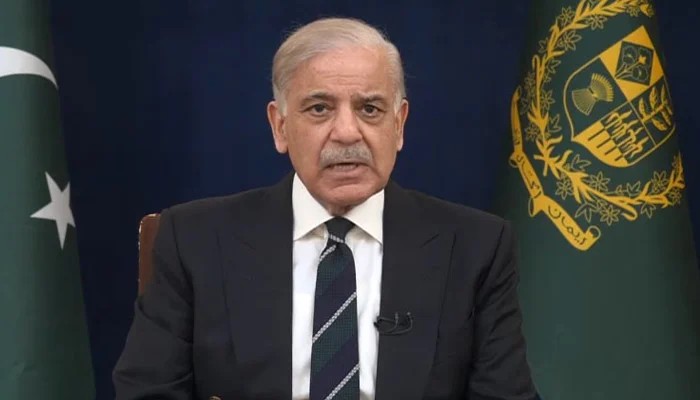
In a nationally televised address on April 10, Prime Minister Shehbaz Sharif announced Pakistan’s second fuel price cut in six days — reducing petrol to Rs. 366.58/L and diesel to Rs. 385.54/L, effective midnight. The PM said he rejected a proposal to redirect the savings to government expenditure and insisted the full benefit of easing global oil prices be passed directly to the public.
ISLAMABAD, April 10, 2026 — Prime Minister Shehbaz Sharif on Friday night addressed the nation and announced a reduction in fuel prices across all four petroleum products, citing a decline in global crude oil prices following a two-week US-Iran ceasefire brokered by Pakistan. The Petroleum Division issued the formal notification shortly after the address, with the revised petrol price in Pakistan of Rs. 366.58 per litre and diesel price of Rs. 385.54 per litre taking effect from midnight across the country.
The announcement marks the second time in six days that the PM has personally intervened to reduce fuel prices — the first being the Rs. 80 per litre levy cut on April 5, which brought petrol down from the record Rs. 458.41/L set on April 3. Today’s cut brings the total reduction from the April 3 all-time peak to Rs. 91.83 per litre on petrol and an unprecedented Rs. 134.81 per litre on diesel in a single revision.
What PM Shehbaz Said — Key Points From the Address
Speaking in a televised address from Islamabad, PM Shehbaz Sharif described the moment as “historic” — simultaneously announcing economic relief for Pakistanis and a major diplomatic development in the Gulf. Key points from the address:
✅ Petrol cut by Rs. 11.83/L — new rate Rs. 366.58 per litre
✅ Diesel cut by Rs. 134.81/L — new rate Rs. 385.54 per litre (largest single diesel cut in Pakistan’s history)
✅ Kerosene cut by Rs. 17.33/L — new rate Rs. 450.15 per litre
✅ LDO cut by Rs. 25.28/L — new rate Rs. 369.72 per litre
✅ All cuts effective midnight April 10–11, passing through to every petrol pump in Pakistan
The PM stated that the government had already provided Rs. 129 billion in fuel subsidies since February 2026 and had reviewed OGRA’s recommendations, ultimately opting for a more substantial diesel reduction than what OGRA had proposed. He said he personally rejected a proposal to redirect the benefit of lower global oil prices toward government expenditure, insisting it be passed in full to the public.
“Pakistan persuaded both sides to agree to a temporary ceasefire. I thank the Iranian and US leadership for agreeing to negotiate in Islamabad. This is a moment of pride not only for Pakistan but for the wider Muslim world.” — Prime Minister Shehbaz Sharif, televised address, April 10, 2026
The PM also praised Deputy Prime Minister and Foreign Minister Ishaq Dar and Chief of Army Staff Field Marshal Syed Asim Munir for their roles in facilitating the diplomatic breakthrough. Delegations from the US and Iran are expected in Islamabad for formal peace talks in the coming days.
April 2026 Fuel Price Timeline — From Crisis to Relief
The April 11 rates are the fourth fuel price change in Pakistan in just nine days, making this the most turbulent fortnight in the country’s petroleum pricing history. The sequence began with the Strait of Hormuz closure following the February 28 Iran strikes and culminated in the Pakistan-brokered ceasefire that has begun easing global crude benchmarks.
Since the April 3 crisis peak, the combined effect of both PM interventions has removed Rs. 91.83 per litre from the petrol price. Despite this, petrol at Rs. 366.58/L remains Rs. 45.41 higher than the pre-crisis March 7 rate of Rs. 321.17/L, reflecting the portion of the global oil shock that the government cannot yet absorb. For the full revision history going back to 2006, visit our Pakistan petrol price history page.
The Diesel Cut — Why It Matters More Than Petrol
While the petrol reduction of Rs. 11.83/L will be felt by car and motorcycle users, the diesel cut is the more consequential economic development. At Rs. 134.81 per litre, it is the largest single-revision diesel price reduction in Pakistan’s recorded history — and it affects a far broader section of the economy than petrol alone.
Pakistan’s freight, agriculture, and industrial sectors run almost entirely on High-Speed Diesel. Since April 3, trucks, tractors, tube-wells, and factory generators had been running at Rs. 520.35/L — a rate that had already triggered fare increases across transport routes, pushed up the cost of agricultural inputs during the harvesting season, and squeezed industrial margins. At Rs. 385.54/L from April 11, a long-haul truck consuming 3,000 litres monthly saves approximately Rs. 404,000 per month.
Impact of the Rs. 134.81 diesel cut by sector:
🚛 Freight & Transport: Immediate reduction in per-kilometre operating costs. Downward pressure on goods transport fares that spiked after April 3.
🌾 Agriculture: Relief for farmers using diesel tube-wells and tractors during the wheat harvest season. Combined with the Rs. 1,500/acre one-time payment announced April 3, this represents substantial support.
🏭 Industry: Lower fuel input costs for manufacturers and SMEs running diesel generators, particularly relevant given the ongoing power outage situation in parts of the country.
🍅 Food prices: Lower transport and production costs should over time reduce inflationary pressure on fresh produce, processed foods, and everyday commodities.
Why Did Global Oil Prices Fall?
The April 11 cuts were made possible by a softening in international crude benchmarks — primarily Brent crude, which had surged past $131 per barrel following the Strait of Hormuz closure in late February but has since retreated as the prospect of a US-Iran ceasefire reduced the immediate supply shock. Pakistan’s diplomatic role in facilitating the ceasefire — and hosting formal peace talks in Islamabad — accelerated the market’s confidence that Gulf shipping lanes may gradually reopen.
For context, every $1 fall in Brent crude reduces Pakistan’s OGRA-calculated petrol price by approximately Rs. 1.50–2.00 per litre. With Brent easing from $131 toward the $120–125 range, the formula-based relief available to OGRA — and the government — has been growing daily. Whether this trajectory continues depends heavily on how quickly the Strait of Hormuz reopens and whether the Islamabad talks produce a durable agreement.
What This Means at the Pump — Consumer Calculations
For the roughly 25 million motorcycle riders who form the backbone of Pakistan’s daily commuter and delivery economy, the effective price drop is meaningful. A Honda CD70 averaging 55 km/L covering 30 km daily uses approximately 16–17 litres per month. At Rs. 366.58/L, that is around Rs. 6,018–6,232 per month — falling further to Rs. 5,318–5,532 for those claiming the Rs. 100/L motorcycle subsidy (effective price Rs. 266.58/L).
Car users on a standard 40-litre fill see their tank cost drop from Rs. 15,120 (at Rs. 378/L) to Rs. 14,663 — a saving of Rs. 457 per fill. Compared to the April 3 peak of Rs. 18,336 per 40-litre fill, the combined effect of both PM cuts represents a saving of Rs. 3,673 per full tank. Use our free fuel cost calculator to work out your exact monthly saving at the new rate.
Motorcycle Subsidy — Still Active at Rs. 100/L
The motorcycle subsidy announced on April 3 — Rs. 100 per litre off, capped at 20 litres per fill for three months — remains fully active under the April 11 pricing. With today’s pump price at Rs. 366.58/L, motorcyclists claiming the subsidy via CNIC/biometric verification at designated pumps pay an effective rate of Rs. 266.58 per litre. Punjab and Sindh provincial subsidy registration windows remain open.
When Is the Next Petrol Price Revision?
OGRA has been operating on weekly reviews since March 7, 2026, having shifted from the standard fortnightly cycle due to global oil market volatility. Under this accelerated schedule, the next fuel price review is expected around April 16, 2026. Whether it brings further relief, holds steady, or reverses depends on three variables: the trajectory of Brent crude, the progress of US-Iran peace talks in Islamabad, and the PKR’s performance against the dollar in the intervening days.
How to stay updated on the next OGRA revision:
Official OGRA notifications are published on ogra.org.pk and the Ministry of Energy website. PakistanPetrolPrices.com updates all fuel rates the moment each notification is issued. Check the petrol price today page or the OGRA rate page for the April 16 update. New prices take effect from midnight on the day of announcement.
PSO, Shell, Total PARCO — All Charging New Rates From April 11
All licensed oil marketing companies — PSO, Aramco, Shell, Total PARCO, Attock, GO, and Hascol — are legally required to charge the OGRA-notified maximum retail price from midnight April 11. Any pump charging Rs. 378/L or more for petrol from April 11 onward is overcharging. Consumers can report violations to OGRA at 0800-66772 or via the complaint portal at ogra.org.pk.
For Hi-Octane (RON 95-97), which is not OGRA-regulated, prices are expected to ease modestly from the ~Rs. 670/L seen earlier in April, now approximating Rs. 650/L at major stations — though exact rates vary by company and city. Check our Hi-Octane price page for the latest company-wise rates.