Pakistan fuel price hedging 2026: the new government programme and its impact on consumer prices
The federal government launched a fresh fuel‑price hedging programme in early 2026, aiming to shield households from volatile international oil markets. By fixing a portion of the wholesale price of petrol and diesel, officials hope to stabilise retail rates for the coming year. Early data suggest the scheme has already softened the rise in consumer‑price inflation, though critics warn of fiscal strain. This article unpacks how the programme works, its economic trade‑offs and what it means for everyday Pakistani commuters.
Why the government turned to hedging in 2026
Since 2022, Pakistan has endured a series of sharp oil‑price spikes linked to geopolitical tensions and supply chain disruptions. The IMF‑backed macro‑economic programme urged the state to reduce subsidies, but the resulting price hikes sparked public unrest. By mid‑2025, the Finance Ministry reported that fuel‑related items accounted for roughly 12 % of the CPI basket.
In response, the new coalition government introduced a hedging mechanism modelled on the 2017‑2018 scheme that was discontinued after fiscal pressures mounted. The current programme differs in two key respects: a lower coverage ratio (30 % of wholesale price versus 50 % previously) and a shorter contract horizon of six months, allowing the treasury to adjust more flexibly to market swings.
Finance Minister Shahbaz Ahmed explained that the move is “a targeted, time‑bound intervention to protect the most vulnerable while preserving fiscal space for development spending.”
How the hedging mechanism is structured
The Ministry of Energy signs forward contracts with approved banks and international oil traders. These contracts lock in a ceiling price for a fixed volume of crude oil that will be refined into gasoline and diesel. If the global spot price exceeds the ceiling, the government pays the difference to the refinery; if it falls below, the treasury receives a rebate.
Key parameters of the 2026 programme include:
- Coverage: 30 % of total domestic fuel consumption, estimated at 13 million tonnes per year.
- Contract length: Six‑month rolling contracts, renewed in January and July.
- Funding source: A dedicated hedging fund financed by a 0.3 % levy on corporate profit tax.
- Risk sharing: 60 % of any excess cost is borne by the fund, the remaining 40 % is absorbed by the Ministry of Finance.
These terms are designed to limit the fiscal hit while still providing a buffer for consumers.
Early impact on retail fuel prices
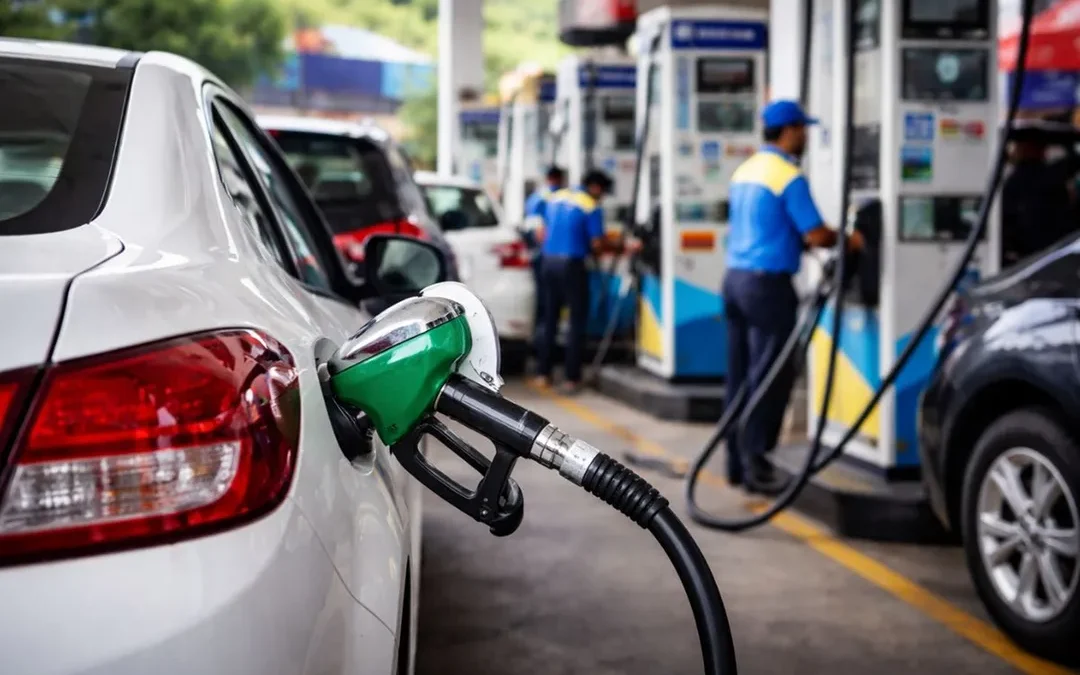
Data released by the Oil Marketing Companies (OMCs) for the first quarter of 2026 show that the average retail price of unleaded petrol rose by 4.2 % year‑on‑year, compared with a 7.5 % increase in the same period of 2025. Diesel saw a 3.8 % rise versus 6.9 % previously. While the numbers still indicate growth, the gap suggests the hedging programme is tempering price volatility.
Consumer‑price inflation (CPI) for the month of June 2026 stood at 9.1 %, down from 11.3 % in June 2025. The fuel component contributed roughly 1.4 percentage points less to the overall index, according to the Pakistan Bureau of Statistics.
Economist Dr. Ayesha Khan notes that “the modest dampening effect on fuel prices is translating into slower growth in transport and food‑price inflation, which together make up a large share of household expenditure.”
“Hedging is not a permanent subsidy; it is a market‑based insurance that buys us time to implement structural reforms,” said Finance Minister Shahbaz Ahmed.
Fiscal implications for the treasury
While the programme eases pressure on consumers, it does add a contingent liability to the state budget. The hedging fund’s first six‑month cycle required a payment of roughly PKR 45 billion, funded through the profit‑tax levy and a modest re‑allocation from non‑defense capital spending.
Critics from the opposition argue that the levy could discourage private investment, especially in the manufacturing sector. However, the Finance Ministry counters that the levy is modest compared with the overall tax‑to‑GDP ratio of around 15 % and that the fund’s design includes a rollover clause to return unused balances to the general revenue.
International observers, including the World Bank, have praised the transparency of the contracts, which are published on the Ministry’s portal within 48 hours of signing.
Potential risks and future adjustments
The hedging scheme is exposed to several risks. A sudden surge in crude oil prices beyond the ceiling could force the treasury to draw heavily from the fund, potentially crowding out other spending. Conversely, a prolonged dip in global oil prices would leave the government paying for a premium that the market no longer justifies.
To mitigate these risks, the programme includes a review clause after each six‑month period. The Finance Minister has signalled that the coverage ratio could be adjusted upward if inflationary pressures intensify, or reduced if fiscal deficits widen.
Analysts also warn that reliance on hedging may delay needed structural reforms, such as improving energy efficiency, expanding public transport, and diversifying the energy mix toward renewables.
Quick answers
What is the coverage ratio of the 2026 hedging programme?
The government hedges 30 % of the estimated domestic fuel consumption, roughly 13 million tonnes per year.
How does the programme affect retail fuel prices?
Retail petrol and diesel prices have risen slower than in previous years, with a 4.2 % and 3.8 % year‑on‑year increase respectively in Q1 2026.
What funds the hedging payments?
A dedicated hedging fund, financed by a 0.3 % levy on corporate profit tax and occasional Treasury transfers, covers the bulk of the cost.
Is the programme a permanent subsidy?
No. It is a temporary market‑based insurance tool designed to smooth short‑term price spikes while fiscal policy remains disciplined.