The Federal Cabinet Just Made It Official: Fuel Prices in Pakistan Will Now Change Every Day
Petroleum Minister Ali Pervaiz Malik announced the shift to daily fuel pricing at a press conference in Islamabad today, alongside Information Minister Attaullah Tarar. Here is what changes, what stays the same, and what it means for you.
The federal cabinet, chaired by Prime Minister Shehbaz Sharif, has decided that petrol and diesel prices in Pakistan will now be determined on a daily basis. The decision was announced this afternoon by Federal Minister for Petroleum Ali Pervaiz Malik at a press conference alongside Federal Minister for Information Attaullah Tarar, and it represents the most significant structural change to Pakistan’s fuel pricing system in a generation.
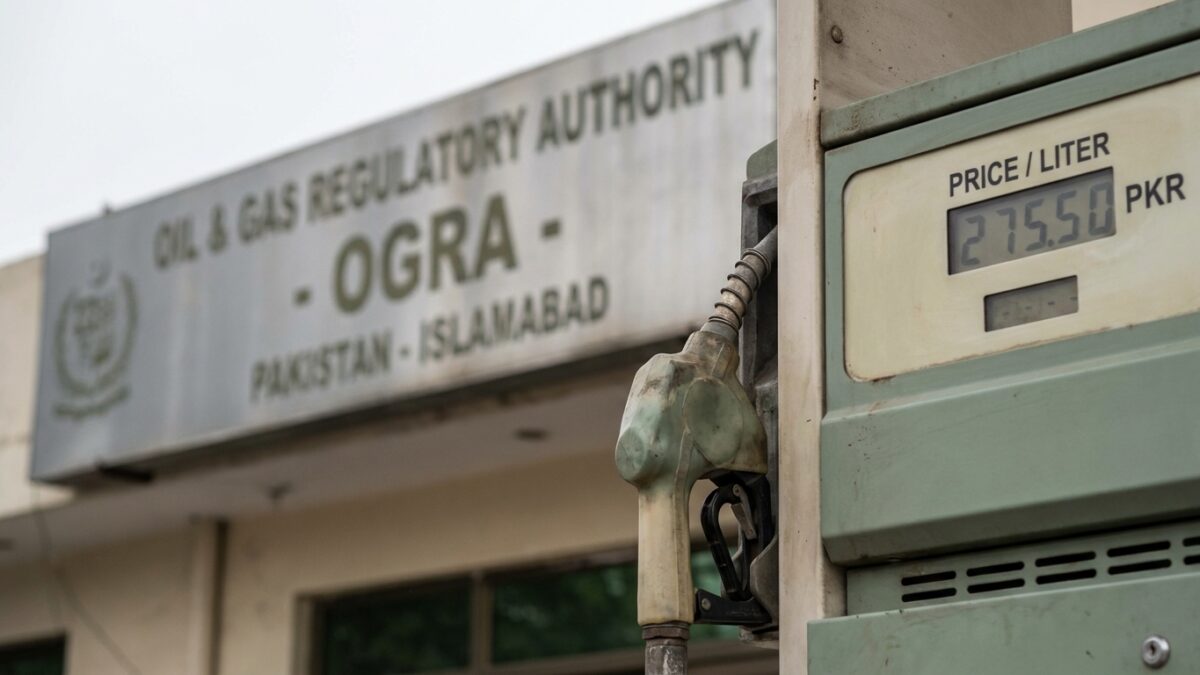
Speaking to reporters in Islamabad, Malik said the move is aimed at bringing greater transparency to the pricing mechanism, without exposing the state to financial risk. “The federal cabinet and the prime minister decided that, without exposing the state to any risk, the responsibility would be assigned to Ogra to determine petroleum prices daily in line with international market trends,” he said. “Today’s decision is aimed at bringing greater transparency to the entire system so that people themselves can understand why increases in petroleum prices become unavoidable.”
Under the new system, the Oil and Gas Regulatory Authority (OGRA) will calculate fuel prices every day using the average of the previous seven days of international oil prices, notify the revised rates, and publish them on its official website. The most consequential change is procedural: OGRA will no longer need to seek fresh approval from the federal government each time international prices move. The summaries that historically went to the Petroleum Division, the Finance Division, and the Prime Minister’s office are gone. The price formula runs on its own, and the minister’s signature is no longer on the weekly announcement.
The decision comes against the backdrop of renewed escalation in the region, including the recent exchange of strikes between the United States and Iran and the renewed closure of the Strait of Hormuz. The international benchmarks have moved sharply in the last week. Diesel Platts has risen from around $110 per barrel to roughly $140 per barrel, and petrol Platts has climbed from around $89 per barrel to nearly $100 per barrel. Under the old weekly system, the cumulative effect of these moves would have been a single, large, politically uncomfortable weekly price hike. Under the new daily system, the same moves get absorbed into smaller daily adjustments that are more closely aligned with what is actually happening in the international market.
For OGRA, the change is a significant expansion of authority and responsibility. The regulator will now publish not just the headline rate, but the full breakdown of components that make up the price consumers pay at the pump, including the underlying Platts benchmark, the import premium, the petroleum levy, the climate support levy, and the dealer and OMC margins. The transparency ask is meaningful: consumers will be able to see, in detail, why a price went up or down, which is the kind of disclosure that the current system has historically avoided.
The minister also used the press conference to push back on the impression that the new system would put an additional burden on the public. He noted that the government is gradually moving toward deregulation of petroleum products, and that the daily pricing mechanism is part of that longer-term direction rather than a one-off intervention. He also confirmed that Prime Minister Shehbaz Sharif has directed the authorities to act against profiteers, with strict action wherever petrol is sold above the notified price. On supply, the minister confirmed that there is no shortage at present, and that Pakistan holds petroleum stocks for approximately one-and-a-half to two months.
For consumers, the practical implications are significant. The price at the pump will now change every day, sometimes by small amounts and sometimes by larger ones, depending on what is happening in the international market. Most people will not check the fuel price every day, which means that the experience of paying for fuel will feel more volatile even if the average price over a month is similar to what it would have been under the old system. Fuel-pricing apps, which already exist, become more useful under this regime: a household that is flexible about when to fill up can save a few rupees per litre by paying attention. The headline announcement moment, which has historically been a Friday evening or a Monday morning event, is gone. The price will move quietly, and the rhythm of the news will be quieter too.
For OMCs and dealers, the operational implications are similar to what was discussed in earlier reform coverage. The daily pricing system reduces the inventory risk that has historically been a problem under fortnightly and weekly cycles, particularly for smaller operators, but it also increases the administrative work of managing price changes and the importance of compliance. Dealers who try to charge above the notified rate will face enforcement action, and the minister’s commitment on this point was unusually direct.
For the broader economy, the shift to daily pricing is consistent with the structural reform direction the government has been signalling for several months. The federal cabinet has now formalised what the pricing committee has been recommending since at least early July, and the role of OGRA as the daily price-setter is the institutional outcome of that process. The next steps, which the minister did not specify in detail, will be the implementation details: how the daily rates get pushed out to the thousands of petrol pumps across the country, how the system handles connectivity gaps in remote areas, and how compliance is monitored at the retail level. The federal cabinet has signed off on the policy, and the operational work now moves to OGRA and the Petroleum Division.
The bottom line. As of today, the way fuel prices work in Pakistan has fundamentally changed. Petrol and diesel prices will be set every day by OGRA, on the basis of the previous seven days of international oil prices, and published on OGRA’s website with a full breakdown of components. The federal government is no longer in the approval chain. The political buffer that allowed previous governments to absorb shocks through petroleum levy adjustments is structurally reduced. The transparency that consumers have been asking for is now a legal requirement. Whether the new system delivers on the promises of transparency, predictability, and fair pricing will be visible in the next few weeks, as the first round of daily adjustments plays out.
For the broader context on the pricing reform debate, our petrol price formula reform coverage walks through the related shift. For how the current OGRA formula works, our OGRA step-by-step formula guide is useful. For the petroleum levy and climate support levy context, our PPSF stabilisation fund coverage is relevant. For the most recent price move, our petrol hike coverage walks through the latest numbers.
Source: Federal Minister for Petroleum Ali Pervaiz Malik’s press conference alongside Information Minister Attaullah Tarar, July 17, 2026; PID Press Release No. 97, July 13, 2026.