How Often Should Petrol Prices Change in Pakistan? The Answer Is About to Change.
Pakistan is moving from a fortnightly fuel price review to a weekly one, and may soon shift to daily. Here is what is changing, why, and what it means for your fuel bill.
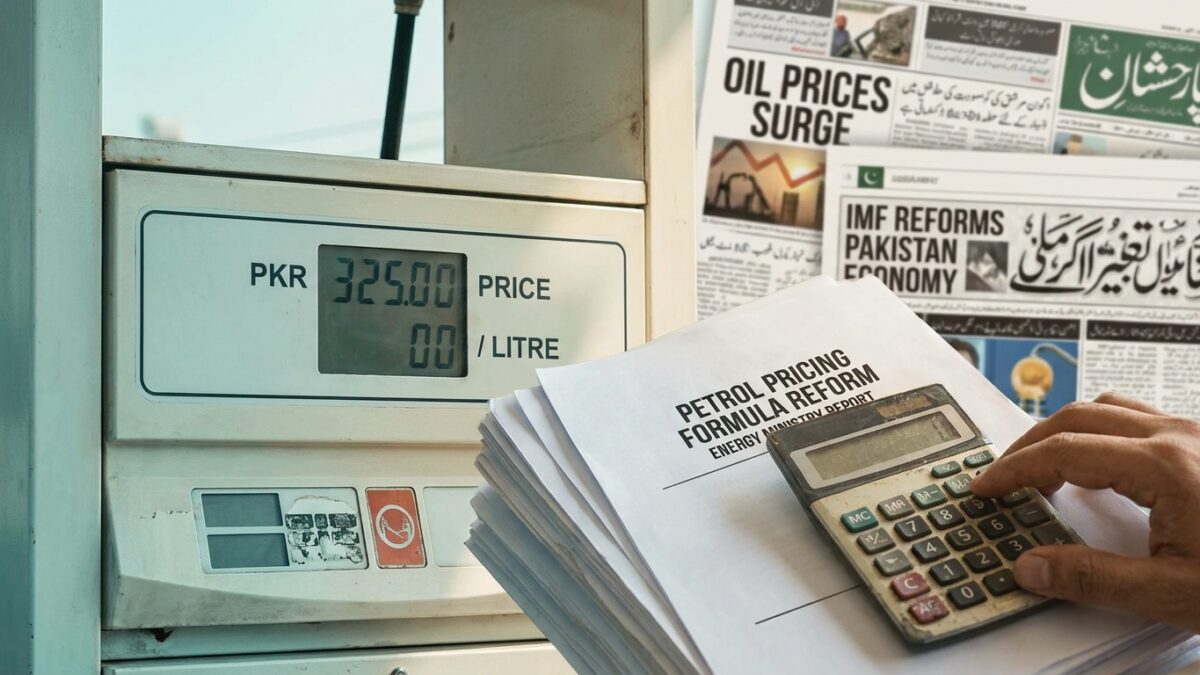
For most of the last two decades, the rhythm of petrol and diesel prices in Pakistan has been predictable: a fortnightly review, a quiet weekend, and a small headline number on Monday morning that you either absorbed or complained about over chai. That rhythm is breaking. Over the last few months, the government has shifted to a weekly review mechanism, and there is now an active conversation, pushed by the IMF, about going to daily pricing. The change matters more than the surface-level coverage suggests, and ordinary consumers are likely to feel it in their monthly budgets in ways that have nothing to do with the headline price.
What is the current petrol pricing mechanism in Pakistan?
Until the recent shift, Pakistan’s fuel pricing worked on a two-week cycle. The Oil and Gas Regulatory Authority (OGRA) would compute a recommended price based on a rolling import-parity calculation that includes the international Platts benchmark for the relevant product, a weighted average of Pakistan State Oil’s (PSO) actual import premium, customs duties, and a series of fixed margins for dealers, oil marketing companies, and the inland freight equalisation margin. That recommendation would go to a special committee chaired by the Finance Minister, which would then approve the final price, factoring in any changes to the petroleum levy and climate support levy. The price would be notified, generally on a Friday or a Monday, and the new rate would apply at midnight.
The fortnightly cycle was designed for a relatively stable global oil market. When the world price moved in slow, predictable waves, two weeks was a reasonable interval — long enough to smooth out daily noise, short enough to keep domestic prices reasonably close to international reality. The problem is that the global oil market has not been slow or predictable for the last several years. Conflicts in the Gulf, sanctions volatility, freight disruptions, and rapid shifts in product premiums have made the fortnightly cycle too slow to keep up.
What is changing in the formula?
The shift is structural, not just cosmetic. Under the new weekly mechanism, the government takes a five-day average of the Gulf Arab Platts assessment (Monday to Friday) for each product, applies the weighted average of PSO cargo premiums that are discharged or available for sale in the coming week, and uses the most recent weighted average of import incidentals and customs duties. OGRA submits an indicative price computation every Friday, the relevant committee reviews it, and the new rate is published the same day. The previous two-week averaging window has been replaced by a one-week window, which makes the price much more responsive to recent international moves.
The next likely step, which is being actively discussed in the IMF programme context, is daily pricing. The argument is straightforward: if global prices are moving meaningfully within a day, a weekly review still leaves room for misalignment, and the only way to keep domestic prices in near-real-time alignment with international prices is to adjust them every day. The practical implementation is more complicated, which is why it has not happened yet, but the direction of travel is clear.
Why is the government pushing this now?
Two reasons, and they reinforce each other. First, the volatility in global oil markets over the last six months has been unusually high. Conflicts in the Middle East, sanctions on certain suppliers, and shifts in shipping and insurance costs have created price swings that the fortnightly cycle simply cannot keep up with. When international prices jump or fall sharply mid-cycle, the domestic price stays frozen at the old level for up to two weeks, which creates two problems: a real disconnect between what Pakistani consumers pay and what the underlying product actually costs, and a temptation for hoarders and speculators to take advantage of the gap.
Second, the IMF has been pushing for more frequent price adjustments as part of the broader structural reform agenda under the current programme. The IMF’s view, which the finance ministry officials have echoed in private, is that frequent price adjustments are an essential part of any honest fuel subsidy regime: if you claim not to subsidise fuel, you have to be willing to let the price move with the market. Pakistan has historically had a complicated relationship with this principle, using petroleum levy adjustments to soak up price changes while keeping the headline rate stable. The IMF pressure, combined with the market volatility, is breaking that compromise.
What does this mean for consumers at the pump?
For most consumers, the day-to-day change in price at the pump will probably be small. Daily pricing does not mean daily Rs-5 swings; it means the price will move in smaller increments that more accurately track the international market. Over a month, the total amount you pay for fuel is likely to be similar to what you would have paid under the old system, on average. The difference is in the volatility: the price will move up and down more often, sometimes within the same week, and there will be less of a sense of a single “announcement” moment.
There is a real behavioural implication here. Under the fortnightly system, most consumers checked the price once or twice a month, typically right after a revision was announced. Under daily pricing, the price will change quietly, and consumers will need to be more attentive to the daily rate to know when it’s a good day to fill up. Some fuel-pricing apps already track daily changes; their usefulness will increase. For households that can flex their fill-up timing by a day or two, there is a real opportunity to save a few rupees per litre by paying attention.
What about the petroleum levy and climate support levy?
These are the two big taxes the government collects on every litre of petrol and diesel, and they have historically been the tool the government uses to absorb price changes without touching the headline rate. Under the new mechanism, the levies still adjust, but the rule is now that any change to the petroleum levy or climate support levy has to be notified by the Petroleum Division on the advice of the Finance Division before the publication of each weekly price. The shift makes the levies more transparent and more responsive, but it also removes the quiet, behind-the-scenes lever-pulling that the government has historically used to manage political pressure on fuel prices.
For consumers, this is a mixed bag. On one hand, more transparency is good. On the other, it means that the cushion that used to absorb shocks is smaller, and price changes will be more visible. The political economy of fuel pricing in Pakistan is complicated, and the new mechanism makes it harder for the government to quietly insulate consumers from global volatility.
What about oil marketing companies and dealers?
For OMCs and dealers, the new mechanism creates both opportunities and challenges. On the opportunity side, more frequent price adjustments reduce the risk of being caught holding inventory bought at one price while selling at a lower one. The inventory risk was a real problem under the fortnightly system, particularly for smaller OMCs and dealers, and was one of the reasons the IMF pushed for more frequent adjustments. On the challenge side, more frequent changes mean more administrative work, more pricing updates to manage, and more pressure on margins if the changes happen at inconvenient times.
For PSO specifically, the new mechanism is a structural improvement. The previous system, which used PSO’s own import costs as the benchmark, gave PSO an information advantage that smaller competitors struggled to match. The new weekly mechanism, which uses a more transparent five-day Platts average, levels the playing field somewhat and reduces the chance that smaller OMCs are consistently disadvantaged in the price-setting process.
Could Pakistan go to daily pricing?
Yes, and the conversation is well underway. The IMF has been pushing for daily pricing, and finance ministry officials have publicly said it is the direction of travel. The practical obstacles are real but not insurmountable. The biggest one is the question of how to govern pump-level pricing in real time: how do you ensure that a pump in Peshawar is charging the same price as a pump in Karachi at the same time, when the price is changing daily? Under the fortnightly system, this is straightforward. Under daily pricing, it requires either very tight compliance enforcement or some form of centralised price publication that consumers can verify against.
The most likely path is a phased approach: weekly now, daily for bulk and industrial customers within a year, and daily for retail consumers once the infrastructure and compliance are in place. That sequencing gives the system time to adapt without creating a chaotic retail pricing environment.
What should ordinary consumers do?
Three things. First, if you don’t already have a fuel-pricing app on your phone, install one. The difference between filling up on a Rs 297 day and a Rs 302 day is meaningful, and daily pricing will make that kind of difference more common. Second, pay attention to the petroleum levy and climate support levy changes. These are the components of the price that the government controls directly, and they are the best indicator of what the government is doing behind the scenes to cushion or pass through international moves. Third, expect more noise in the weekly and monthly comparisons. Under daily pricing, the price of fuel on any given day is less meaningful than the average over a week or a month, so adjust your mental model accordingly.
Is the new mechanism better than the old one?
Almost certainly yes, on the margin. More frequent price adjustments reduce the gap between domestic and international prices, reduce hoarding opportunities, reduce the inventory risk for OMCs and dealers, and make the system harder to game. The costs are real too: more volatility for consumers, more administrative work for OMCs, and a smaller political buffer for the government. But on balance, the system that reflects reality more accurately is the better system, even if the short-term experience is bumpier.
What is the timeline for the move to daily pricing?
No firm date yet, but the direction is clear. The weekly mechanism is already in place. Daily pricing for retail consumers is likely within the next 12-18 months, with intermediate steps (daily pricing for bulk customers, then for retail) along the way. The IMF programme timeline, combined with the political calendar, will determine the exact pace. The most likely window is Q1 2027 for the formal announcement, with phased implementation over the following six months.
How often is petrol price changed in Pakistan now?
As of mid-2026, petrol and diesel prices in Pakistan are reviewed weekly, every Friday. The previous system used a fortnightly review cycle. Daily pricing is being considered for the future.
Why is Pakistan moving to weekly fuel price reviews?
Weekly reviews better reflect the volatility in global oil markets, reduce the gap between international and domestic prices, limit hoarding and speculation, and align with IMF programme requirements for more transparent fuel pricing.
Who decides the petrol price in Pakistan?
The Oil and Gas Regulatory Authority (OGRA) computes the indicative price, a special committee chaired by the Finance Minister reviews and approves it, and the Petroleum Division issues the official notification. Under the new mechanism, this process happens weekly.
Will daily fuel pricing make petrol more expensive?
Not necessarily. Daily pricing means the price reflects international moves more accurately, but the average price over a week or month is likely to be similar to the current system. The difference is in the volatility, not the average level.
What is the petroleum levy in Pakistan?
The petroleum levy is a federal tax collected on every litre of petrol and diesel. It goes to general federal revenue. The current petroleum levy rates are set by the government and adjusted as part of the fuel price calculation.
What is the climate support levy in Pakistan?
The climate support levy is a separate federal tax on fuel, introduced in FY26. Its proceeds are ring-fenced for climate-related spending. It was doubled to Rs 5 per litre at the start of FY27.
What is OGRA?
The Oil and Gas Regulatory Authority is the federal regulator responsible for, among other things, computing indicative fuel prices in Pakistan. It does not set the final price; that is done by the special committee chaired by the Finance Minister.
Why is the IMF pushing for daily pricing?
The IMF’s position is that if a government claims not to subsidise fuel, it must let prices move with the market. More frequent price adjustments are an essential part of credible fuel subsidy reform, and daily pricing is the logical end-state.
What is the Platts assessment?
Platts is a global commodity pricing service that publishes daily benchmark prices for petroleum products, including the Gulf Arab Platts assessment used in Pakistan’s fuel pricing formula. The Platts price reflects actual market transactions.
What is PSO’s role in fuel pricing?
Pakistan State Oil is the largest oil marketing company in Pakistan and historically the primary importer of petroleum products. Under the new mechanism, PSO’s import costs are used as a benchmark for the weighted average premium, but the formula is more transparent than the previous PSO-based system.
For the current OGRA step-by-step pricing formula, our OGRA formula guide walks through the mechanics in detail. For the petroleum levy and climate support levy context, our PPSF stabilisation fund coverage is relevant. For the recent Rs 13.18 petrol hike, our petrol hike coverage walks through the latest move.
Source: Official notifications from the Petroleum Division and OGRA on weekly fuel price reviews; Finance Ministry statements on the IMF-driven move toward daily pricing.