On the morning of March 7, 2026, millions of Pakistanis woke up to a number that felt impossible: Rs. 321.17 per litre for petrol — a Rs. 55 overnight hike, the single largest in the country’s history. Within weeks that figure had climbed further, peaking at a jaw-dropping Rs. 458.41 per litre on April 3, 2026. Most Pakistanis blamed the government. A few blamed OGRA. Almost nobody talked about the real culprit: a 33-kilometre-wide chokepoint in the Persian Gulf called the Strait of Hormuz — and Pakistan’s catastrophic, decades-long failure to insulate itself from it.
This is not just an energy story. It is a story about strategic negligence — about a country that consumes roughly 80 percent of its crude from Gulf markets, has no meaningful strategic petroleum reserve, binds itself to IMF pass-through pricing requirements, and then expresses collective shock every time the Middle East catches fire. We need to stop being shocked. We need to start being honest.
“Pakistan did not suffer a petrol crisis in 2026. It suffered the predictable consequence of a structural vulnerability it has maintained, without serious challenge, for thirty years.”
What the Strait of Hormuz Actually Is — and Why It Controls Your Fuel Bill
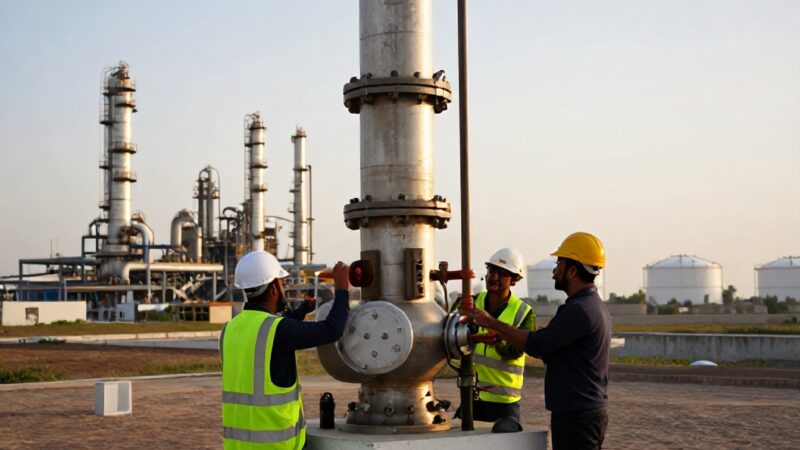
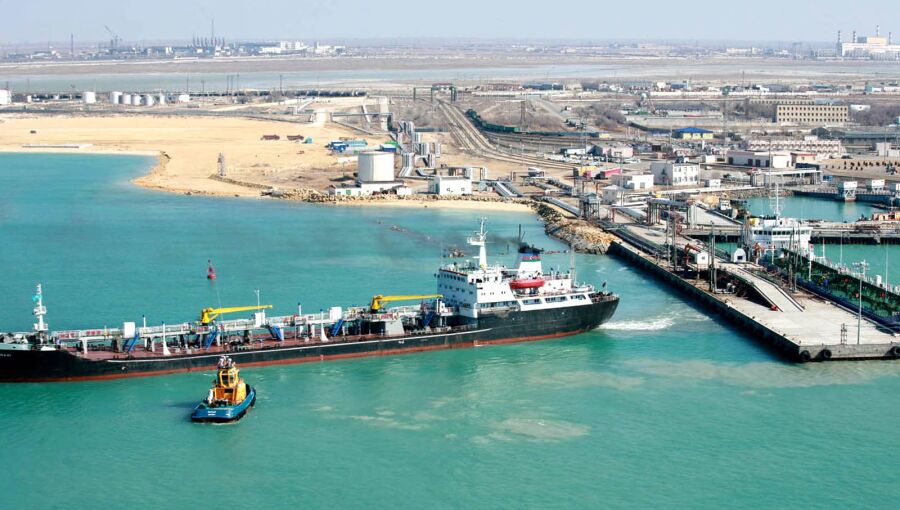
The Strait of Hormuz is a narrow sea lane between Oman and Iran, barely 33 kilometres wide at its narrowest navigable point. Through it passes approximately one-fifth of the world’s daily oil supply — including the crude that powers Pakistan’s vehicles, factories, generators, and farm machinery. When the United States and Israel launched military strikes on Iran on February 28, 2026, Iran’s response was swift and surgical: it effectively closed the Strait.
Global oil markets reacted with panic not seen since 2008. Brent crude surged from approximately $75 per barrel to over $130 within weeks. Dubai and Oman crude — Pakistan’s primary procurement benchmarks — followed suit. The government scrambled, absorbing reportedly over Rs. 129 billion in emergency subsidies before it could no longer hold the line. When it broke, it broke hard. The impact on ordinary Pakistanis was immediate and brutal: transportation costs surged, food prices followed, and the ripple effects of that 43 percent single-day petrol hike on April 3 are still working their way through the economy.
The 2026 Crisis — Timeline at a Glance
- Feb 28, 2026: US-Israel strikes on Iran. Strait of Hormuz effectively disrupted. Brent crude begins its surge from ~$75/bbl.
- Mar 7, 2026: Emergency petrol hike of Rs. 55/litre — largest single-day increase in Pakistan’s history. OGRA shifts to weekly pricing reviews.
- Apr 3, 2026: Petrol reaches Rs. 458.41/litre — an all-time record. HSD diesel crosses Rs. 520/litre.
- Apr 4, 2026: PM Shehbaz Sharif cuts petroleum levy by Rs. 80 to Rs. 378/litre.
- Apr 11, 2026: Further cut to Rs. 366.58/litre as ceasefire optimism eases global crude.
The Geography of Dependence
Let us be precise about the structural problem, because vagueness has allowed it to persist unchallenged. Pakistan procures approximately 80 percent of its crude oil from Gulf markets — primarily through suppliers pricing against Dubai and Oman benchmarks. Every litre of petrol at the pump, every litre of HSD diesel that powers our trucks and tractors, every drop of kerosene used in rural kitchens — all of it passes, at some point in its supply chain, through or is priced against markets that sit behind the Strait of Hormuz.
This is not a secret. Energy economists have flagged it for decades. Yet successive governments — PPP, PML-N, PTI, coalition administrations of every ideological stripe — have treated it as someone else’s problem to solve at some future date. That future date arrived in February 2026.
The uncomfortable arithmetic is this: Pakistan has no meaningful strategic petroleum reserve. While the International Energy Agency recommends member states maintain 90 days of net import cover, Pakistan’s storage capacity covers a fraction of that. When supply disrupted, there was no buffer. The price at the pump reflected the crisis in real time, because there was nothing standing between the Strait of Hormuz and your fuel tank except a government subsidy that could only stretch so far.
“Every rupee Pakistan does not spend on strategic reserves, diversification, and pipeline infrastructure today is a tax it will pay — with interest — the next time a conflict ignites in the Gulf.”
The IMF Constraint Is Real — But It Is Also a Convenient Excuse
When the government finally let petrol prices spike, officials pointed to the IMF’s Extended Fund Facility — a $7 billion programme that requires Pakistan to pass on international energy price movements to consumers rather than absorbing them through subsidy. This is a real constraint. The IMF conditionality is not fiction.
But here is what the constraint does not explain: why Pakistan entered the IMF programme in a fiscal position so weak that it had no room for any emergency energy spending at all. It does not explain why a country that has been on 24 IMF programmes since 1958 has not used a single period of relative stability to build a meaningful petroleum buffer or diversify its import sourcing. The IMF did not prevent Pakistan from building strategic reserves over the past decade. Political will and fiscal discipline did — or rather, the absence of both.
What a Rational Response Looks Like
The ceasefire optimism that allowed OGRA to cut petrol to Rs. 366.58 on April 11 is welcome, but it is not a solution. Brent crude easing from $131 toward $110–115 buys relief, not security. The Strait of Hormuz remains open today. It can close again tomorrow. Any serious response to what happened in 2026 must include at minimum three things:
First, a genuine strategic petroleum reserve. Pakistan must legislate and fund a minimum 45-day net import cover held in domestic storage, with quarterly independent audits. This is not cheap. It is, however, considerably cheaper than absorbing Rs. 129 billion in emergency subsidies and watching inflation spike across an entire economy.
Second, supplier diversification. Pakistan has been slow to operationalise alternative crude sourcing from Central Asia, Africa, and non-Gulf Middle Eastern producers. The geopolitical groundwork for this — including the Russia-Pakistan discussions on discounted crude — must be accelerated, not deferred until the next crisis. Every additional sourcing corridor reduces Hormuz exposure at the margin.
Third, accelerated domestic energy transition. This is not an argument to dismantle the petroleum sector overnight. It is an argument that every electric vehicle on a Pakistani road powered by domestic coal, gas, hydro, or solar represents one less unit of Hormuz-dependent demand. The fuel cost calculator every Pakistani used obsessively in March 2026 to work out whether they could afford the commute should be a recruiting poster for the domestic energy transition, not just a utility tool.
“The petrol pump is the last point in a supply chain that stretches from Gulf oilfields through a contested maritime chokepoint to Pakistani streets. We have treated it as the first point of policy intervention. That has it precisely backwards.”
The Political Temptation to Declare Victory Too Early
As prices have retreated from their April 3 peak, there is an entirely predictable political temptation: to declare the crisis managed, to take credit for the levy cut, to return to business as usual. PM Shehbaz Sharif’s April 11 announcement reducing petrol to Rs. 366.58 per litre was met with genuine relief by consumers. It deserved to be. The levy cut was the right call under the circumstances.
But relief is not reform. The history of petrol prices in Pakistan is a history of crises followed by brief recoveries followed by the same crisis in a new form. From the supply shocks of 2008, through the Rs. 331 peak of September 2023, to the Rs. 458 catastrophe of April 2026 — each time, the underlying vulnerability remained untouched. Each time, we told ourselves this was exceptional. None of it was exceptional. All of it was structural.
What Pakistani Consumers Deserve to Know
If you are a Pakistani consumer trying to understand why your fuel bill behaves the way it does, the honest answer is this: the petrol price you pay today is not primarily determined in Islamabad. It is determined in the Gulf, on global commodity markets, and — in moments of crisis — by whoever controls access to a 33-kilometre strait that Pakistan has never seriously planned to be independent of.
OGRA’s formula, the fortnightly or now-weekly pricing cycle, the petroleum levy, the IMF conditionalities — all of these are the visible domestic machinery of a price that originates far beyond Pakistan’s borders and Pakistan’s control. Understanding this does not make the Rs. 366.58 litre less painful. But it does clarify where the real solutions lie: not at the pump, not at the OGRA notification, and not in any single government’s levy policy — but in the long-term, unglamorous, fiscally demanding work of reducing the exposure itself.
The Strait of Hormuz will not wait for Pakistan to be ready. The question is whether Pakistan will wait for the Strait to close again before it acts.
Editor’s Note: This is an opinion piece reflecting the analysis and views of the editorial team at PakistanPetrolPrices.com. All fuel price figures cited are sourced from official OGRA notifications. For the latest official petrol rate, visit our OGRA petrol price page, updated with every government revision.