Pakistan Doubles Climate Support Levy on Petrol and Diesel to Rs 5/Litre From July 2 2026
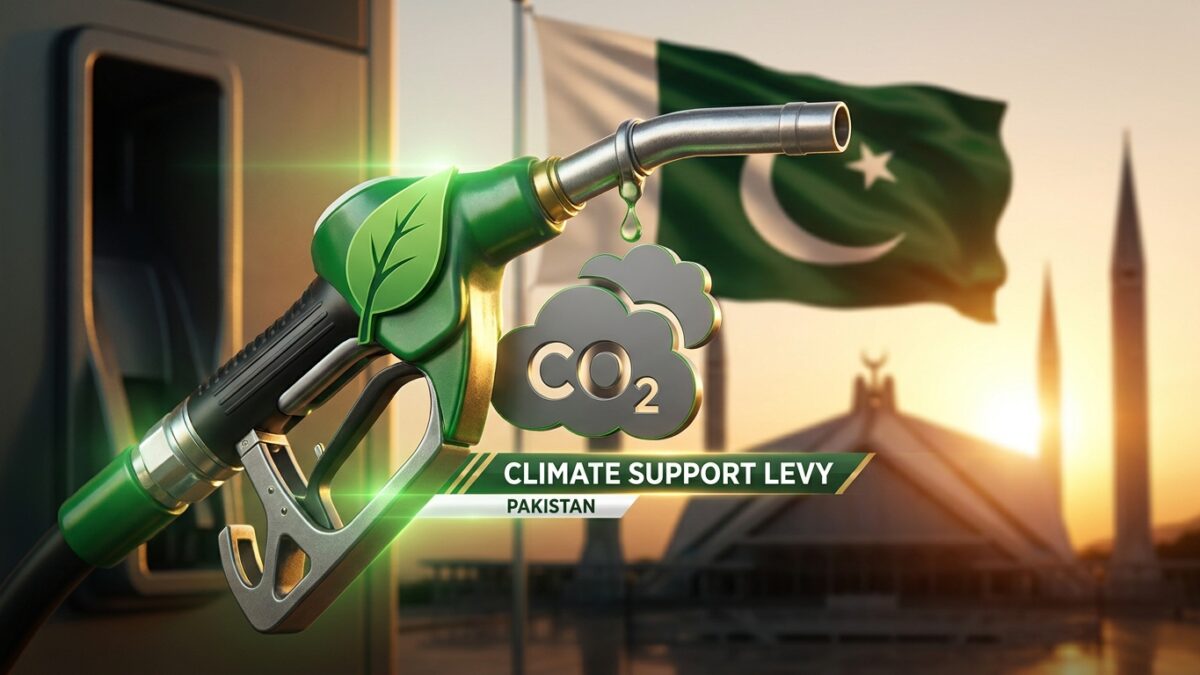
The federal government has doubled the Climate Support Levy from Rs 2.50 to Rs 5 per litre on petrol, diesel, and high-octane blending component (HOBC), effective July 2, 2026. The increase is offset by an equal reduction in the Petroleum Levy, leaving consumer-facing pump prices unchanged. The move is part of Pakistan’s commitment to the IMF to phase in a supplementary carbon levy on petroleum products by FY27.
The federal government, through the Petroleum Division, has issued formal notifications raising the Climate Support Levy (CSL) on motor spirit (petrol) and high-speed diesel (HSD) from Rs 2.50 to Rs 5 per litre, effective from the price revision window of July 2, 2026. The same Rs 2.50 increase has been applied to the high-octane blending component (HOBC). To prevent any impact on consumer-facing fuel prices, the government has simultaneously reduced the Petroleum Levy on petrol, HSD, and HOBC by Rs 2.50 per litre, fully offsetting the CSL increase. The result: headline pump prices for petrol and diesel remain unchanged, but the composition of the per-litre tax take shifts meaningfully toward the climate component and away from the general Petroleum Levy.
What changed on July 2, 2026
The Petroleum Division’s notifications revise the per-litre tax structure on the three major transport fuels:
| Fuel | Old CSL | New CSL | Old Petroleum Levy | New Petroleum Levy | Pump Price Change |
|---|---|---|---|---|---|
| Petrol (MS-92) | Rs 2.50/L | Rs 5.00/L | Rs 66.25/L | Rs 63.75/L | No change |
| High-Speed Diesel (HSD) | Rs 2.50/L | Rs 5.00/L | Rs 72.97/L | Rs 70.47/L | No change |
| HOBC | Rs 2.50/L | Rs 5.00/L | Rs 2.50/L offset | — | No change |
The HOBC Petroleum Levy adjustment is matched to its own CSL increase, leaving the total tax take per litre of HOBC unchanged from the pre-July 2 rate.
Why the rebalance now
The CSL was introduced in FY26 at Rs 2.50 per litre as part of Pakistan’s first-year commitment to the IMF Extended Fund Facility. The IMF’s structural reform package required Pakistan to phase in a supplementary carbon levy on petroleum products over a defined schedule, with the target of Rs 5 per litre by FY27.
Under the schedule:
| Fiscal year | CSL rate | Status |
|---|---|---|
| FY26 (2025-26) | Rs 2.50/L | Active FY26 rate |
| FY27 (2026-27) | Rs 5.00/L | Effective July 2, 2026 (per IMF commitment) |
| FY28+ (potential) | Rs 10-20/L | Subject to IMF programme extension and carbon-pricing policy |
The July 2, 2026 rebalance completes the FY27 phase of the commitment. The IMF’s structural benchmarks for the next programme review (expected Q3 2026) will assess whether Pakistan proceeds with the next phase of carbon pricing or holds the CSL at Rs 5.
What the Climate Support Levy actually funds
The CSL is a ring-fenced levy — its proceeds must be spent on climate-related initiatives. Under the Petroleum Levy (Amendment) Ordinance 1961, CSL revenue is allocated to:
| Category | Allocation | Examples |
|---|---|---|
| Climate adaptation | 40% | Flood resilience, drought management, glacier monitoring, water conservation |
| Renewable energy | 30% | Solar and wind projects, grid integration, energy storage |
| Environmental protection | 15% | Air quality monitoring, pollution control, biodiversity |
| Climate finance administration | 10% | Reporting, MRV (monitoring, reporting, verification), institutional support |
| Just transition support | 5% | Worker retraining, EV transition support for transport operators |
The ring-fencing is the key difference between the CSL and the Petroleum Levy. The general PL can be spent on any federal expenditure; CSL is restricted to climate purposes. This makes the CSL politically more acceptable (the additional tax is visibly tied to climate action) and structurally important for the IMF (it represents the structural shift to carbon pricing).
How much revenue the CSL generates
At the new Rs 5/litre rate:
| Fuel | Monthly consumption (litres) | Monthly CSL revenue (Rs) | Annual CSL revenue (Rs) |
|---|---|---|---|
| Petrol (MS-92) | ~700,000 tonnes (~875M litres) | ~Rs 4.4 billion/month | ~Rs 52.5 billion/year |
| High-Speed Diesel (HSD) | ~1,400,000 tonnes (~1.65B litres) | ~Rs 8.2 billion/month | ~Rs 98.7 billion/year |
| HOBC | ~50,000 tonnes | ~Rs 0.32 billion/month | ~Rs 3.9 billion/year |
| Total annual CSL revenue | ~Rs 155 billion/year |
The CSL is expected to generate approximately Rs 155 billion annually at the new Rs 5/litre rate, with the bulk coming from HSD (which has the largest consumption volume). This is a 100% increase from the FY26 CSL revenue of ~Rs 77 billion.
What this means for consumers
For Pakistani consumers, the July 2, 2026 rebalance has no direct impact on the price they pay at the pump. The offsetting Petroleum Levy cut means the headline price for petrol and diesel remains at the level established before July 2 (approximately Rs 299.50/litre for petrol and Rs 311.47/litre for HSD based on the previous fortnight’s pricing).
However, three indirect effects may emerge over the coming months:
- Climate spending ramp-up: The additional CSL revenue will fund new climate-adaptation and renewable-energy projects. Households and businesses may see new programs, subsidies, and infrastructure emerge — particularly around solar panel subsidies and EV transition support
- EV price parity pressure: As the CSL rate rises further, electric vehicles and hybrids become more cost-competitive against petrol/diesel vehicles. The current CSL increase is the first step in a multi-year carbon pricing trajectory
- Future pump price increases: The CSL is scheduled to potentially double again to Rs 10/litre by FY28 and Rs 20/litre by FY29. Future rate increases will be fully visible in pump prices, unlike the FY27 rebalance
What this means for the broader economy
For sectors that depend heavily on petroleum products:
| Sector | Impact of FY27 CSL rebalance | Longer-term CSL trajectory |
|---|---|---|
| Freight / trucking | No immediate impact (PL offset) | Future CSL increases flow directly to higher operating costs |
| Agriculture (tubewells, harvesters) | No immediate impact | Rising diesel costs feed into food production costs and food inflation |
| Public transport | No immediate impact | Subsidies may be needed to offset the EV transition |
| Ride-hailing (Careem, Uber) | No immediate impact | Per-km operating cost rises; may translate to higher fares |
| Manufacturing | No immediate impact | Higher logistics costs feed into consumer goods prices |
| Logistics / e-commerce delivery | No immediate impact | Delivery cost pressures may rise |
For the macroeconomy, the CSL rebalance is neutral in the short term (the offset cancels it out) but provides a structural foundation for carbon pricing that will affect transport, food, and consumer goods over the medium term.
What about furnace oil and kerosene
The CSL schedule applies differently to furnace oil and kerosene:
| Product | FY26 CSL | FY27 CSL (effective July 2) | Notes |
|---|---|---|---|
| Furnace oil | Rs 2,665/tonne (~Rs 2.50/L) | Rs 5,330/tonne (~Rs 5.00/L) | Same doubling pattern as petrol/diesel |
| Kerosene | Rs 2.50/L (planned) | Rs 5.00/L (effective July 2) | Lower consumption than petrol/diesel but still significant for rural households |
| LDO | Rs 2.50/L | Rs 5.00/L | Industrial and agricultural use |
Furnace oil is used in industrial boilers and power generation. The CSL increase on furnace oil has implications for industrial production costs and the power sector (which is already a major recipient of the energy subsidy programme).
How the CSL compares to global carbon prices
Pakistan’s CSL is among the lowest carbon prices in the world. Comparison:
| Country / region | Carbon price (per tonne CO2) | Effective CSL equivalent (per litre petrol) |
|---|---|---|
| EU ETS | ~EUR 80/tonne | ~Rs 30-40/L |
| UK ETS | ~GBP 50/tonne | ~Rs 20-25/L |
| Canada federal carbon price | CAD 80/tonne | ~Rs 30-35/L |
| Australia | AUD 30/tonne | ~Rs 12-15/L |
| Singapore carbon tax | SGD 25/tonne (rising to 50 by 2030) | ~Rs 10-15/L |
| Pakistan CSL (current) | ~USD 4-5/tonne | Rs 5.00/L |
| Pakistan CSL (FY28+ potential) | ~USD 8-10/tonne | Rs 10-20/L |
Pakistan’s carbon price is currently 1/15th to 1/6th of developed-country levels. Even at the potential Rs 20/litre by FY29, Pakistan’s carbon price would still be below the EU/Canada level. The CSL trajectory is a slow, deliberate ramp consistent with the IMF programme’s gradualist approach.
How the rebalance works operationally
The Petroleum Division’s notification process for the July 2 rebalance:
The Ministry of Finance confirms with the IMF that the FY27 CSL target of Rs 5/litre is the agreed structural reform benchmark for the current review period.
The Petroleum Division drafts the new levy rates and the offsetting Petroleum Levy reduction, ensuring the consumer-facing pump price remains unchanged.
The levy revisions are tabled at the ECC (Economic Coordination Committee) for approval. The decision is typically ratified within 24-48 hours.
OGRA incorporates the new levy structure into the bi-weekly price notification, which goes to oil marketing companies and is reflected at the pump within 24-48 hours.
The Ministry of Finance and Petroleum Division issue press releases explaining the rebalance. The CSL increase is framed as an IMF-linked reform, not a new tax.
## Frequently asked questions
Related coverage on PakistanPetrolPrices.com
For the broader petroleum levy framework that the CSL sits within, our petroleum levy history 2020-2026 walks through the related revenue framework. For the PPSF (price stabilisation fund) that smooths consumer-facing price changes, our PPSF establishment coverage explains the complementary mechanism. For the live pump prices after the rebalance, our June 2026 live petrol price page shows the current state. And for the underlying formula that determines the pump price, our breakdown of what you pay at the pump walks through the full structure.
Sources: Petroleum Division notifications (July 1-2, 2026), Ministry of Finance press releases, IMF Extended Fund Facility review documents, OGRA price notifications, Federal Board of Revenue, SBP energy-import data, State Bank of Pakistan fiscal data, ARY News, Dawn, Business Recorder, The News International, Express Tribune, Geo News, Profit Magazine. CSL rates and allocations current as of July 2, 2026; specific allocations may be revised in subsequent notifications.