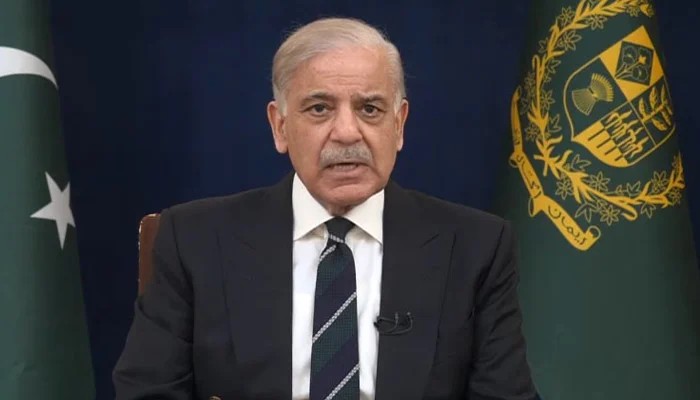
Prime Minister Shehbaz Sharif announced on Friday, June 19, 2026 that the federal government will pass a “massive reduction” in petrol prices to consumers, with the new rates taking effect from June 20, 2026. The announcement, framed as an Eid ul Adha gift for the public, follows a series of fuel-price decisions over the past two months that have moved the headline rate from a wartime peak of Rs 458.41 per litre in early April to Rs 377.81 currently, and is expected to take the new petrol price below the Rs 320-330 range when the formal OGRA notification is issued on the night of June 19-20. Market estimates and earlier reporting suggest the cut could be Rs 50-55 or more per litre, depending on the final formula and the petroleum-levy decision.
What the PM actually said
In a national address and accompanying social media posts, Prime Minister Shehbaz Sharif confirmed that the government will pass a meaningful fuel-price cut to consumers starting June 20, 2026. He framed the cut as an “Eid ul Adha gift” timed to the festival period, and emphasised that the relief comes on top of the Rs 22 cut per litre on both petrol and high-speed diesel implemented on June 6 and the further Rs 4 cut on petrol and Rs 2 cut on diesel that took effect on June 13.
The PM’s broader argument is that as international crude prices have come down — Brent fell from the wartime peak of around $104 a barrel to the $87-92 range after the US-Iran ceasefire announcement — the fiscal space to pass on relief has opened up. He has signalled repeatedly that the government intends to pass on further cuts as they become available, while keeping the petroleum levy at a level that supports the IMF programme’s revenue targets.
How big is the cut expected to be
Reporting from multiple outlets ahead of the formal notification has converged on a range. Market estimates point to a cut of Rs 50-55 per litre on petrol, with some reports suggesting the cut could go higher if the government chooses to release part of the petroleum levy into the consumer price. Diesel is expected to see a similar magnitude cut, with the international diesel price having moved more sharply than petrol in the recent cycle.
For a full-time driver running 1,500 km a month in a 1,000cc vehicle with average fuel economy, a Rs 50 per litre cut translates into monthly savings of roughly Rs 15,000. For a household running a 1,300cc car, the savings are closer to Rs 20,000-22,000 per month. For commercial transport operators running diesel trucks, a similar cut on diesel produces savings of Rs 60,000-100,000 per month per truck, depending on mileage.
What the June 19-20 OGRA notification will confirm
The formal price notification is issued by OGRA on the night of June 19-20, following the standard bi-weekly pricing review. The notification will specify:
- The new per-litre price for petrol (MS-92)
- The new per-litre price for high-speed diesel (HSD)
- The new per-litre price for kerosene
- The new per-litre price for light diesel oil (LDO)
- Any change to the petroleum levy per litre (the federal government retains discretion on this within the IMF programme limits)
Once the notification is issued, the new rates are binding across all petrol pumps in Pakistan from June 20. The live June 2026 petrol price page will be updated with the new rates as soon as they are released, and the city-specific pages for Karachi, Lahore, Islamabad, and other cities will reflect the same national rate.
Why this cut is different from the previous ones
Pakistan has already seen two fuel-price cuts in June: the Rs 22 cut on both petrol and diesel on June 6, and the Rs 4 cut on petrol and Rs 2 cut on diesel on June 13. Both of those cuts were small in percentage terms — roughly 1% on petrol and 0.5% on diesel — and reflected the partial pass-through of the international crude decline while keeping the petroleum levy elevated.
The cut expected on June 20 is structurally different. The international crude price has fallen 17% from the wartime peak, but the cumulative consumer pass-through so far is only about 5% on petrol. The June 20 cut appears designed to close a meaningful portion of that gap, with the government choosing to amplify the relief by either cutting the petroleum levy or accepting a smaller revenue contribution from fuel in the current pricing window. The specific mechanism — whether the cut comes from a lower ex-refinery cost, a reduced levy, or both — will be visible in the OGRA notification.
What it means for different consumers
For private motorists: The expected Rs 50-55 cut on petrol translates into Rs 15,000-22,000 per month in fuel savings for typical household vehicles. For drivers in cities with long commutes, the savings can exceed Rs 30,000 per month. Over a year, the cumulative savings are meaningful even for low-mileage drivers.
For commercial transport: A similar cut on diesel produces much larger absolute savings because of the higher monthly consumption. A long-haul truck running 15,000 litres a month saves Rs 750,000-825,000 per month at the higher end of the expected cut. For a BRT or mass-transit operator with diesel consumption in the hundreds of thousands of litres, the savings run into tens of millions of rupees per month.
For agriculture: Tubewells, threshers, and light diesel engines used in farming run on HSD and LDO. The diesel cut directly reduces the input cost of the Kharif sowing season, which is at its peak in late June. Lower fuel costs feed through to lower irrigation and harvesting costs, which in turn reduce food production costs and ease food inflation downstream.
For inflation: The State Bank of Pakistan’s research suggests a Rs 10 per litre increase in petrol adds 0.3-0.5 percentage points to the headline Consumer Price Index within 4-6 weeks. A Rs 50 per litre cut should produce a meaningful disinflationary effect in the July-August CPI readings, with the largest impact in transport, food, and consumer goods.
The timeline of cuts in June 2026
Petrol cut by Rs 4 to Rs 377.81 per litre; HSD diesel cut by Rs 2 to Rs 380.78 per litre; kerosene cut by Rs 40; LDO unchanged.
OGRA notification confirmed; new rates binding across all petrol pumps. No additional cut in this window.
PM Shehbaz announces “massive reduction” effective June 20; framed as Eid ul Adha gift. Market estimates point to Rs 50-55+ cut on petrol.
OGRA notification expected overnight; new rates binding across all petrol pumps. Will be updated on this site as soon as the notification is issued.
The pattern of these cuts reflects the government’s stated intention to pass on relief as international prices decline. The PM has used the language of “massive” reduction deliberately, signalling that the June 20 cut is expected to be larger in percentage terms than the previous two combined.
What to watch over the coming days
Three things to watch over the next 48 hours:
1. The formal OGRA notification. The exact per-litre rate for each product will be confirmed by the notification on the night of June 19-20. The June 2026 live page will be updated as soon as the notification is issued.
2. The petroleum levy decision. Whether the cut comes entirely from the ex-refinery cost, or whether the government is releasing part of the petroleum levy, will be visible in the breakdown of the new price. The wider context for the petroleum levy history and recent trends is covered in our analysis, and the complete breakdown of what you pay at the pump walks through the formula.
3. The next pricing window. The standard OGRA pricing cycle is bi-weekly, with notifications on the 1st and 16th of each month. The next window after June 20 will be around July 4, and the cumulative effect of further international price moves will determine whether another cut is in store.
Frequently asked questions
Sources: Prime Minister’s national address, June 19, 2026; Tribune, Dawn,Business Recorder, Pakistan Today, ARY News, GNN News, Samma TV, The Global Times, OGRA notifications, Pakistan Petroleum Division. The exact new rates will be confirmed by the OGRA notification on the night of June 19-20, and this page will be updated with the final figures as soon as they are released.